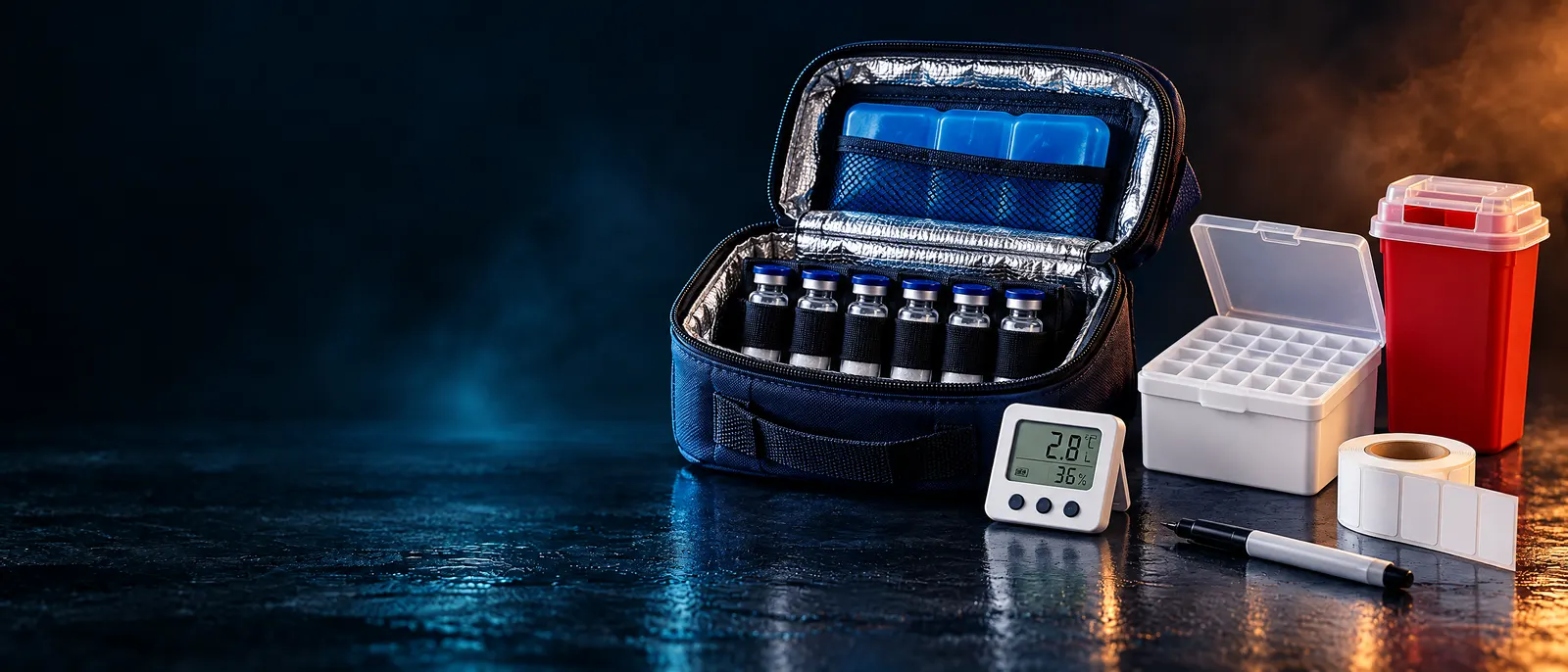
Keep vials cold, labeled and organized
Storage, transport and handling gear for lyophilized and reconstituted research vials, with what to look for in each and links to specific products. Lab supplies at the end of the page are referral links.
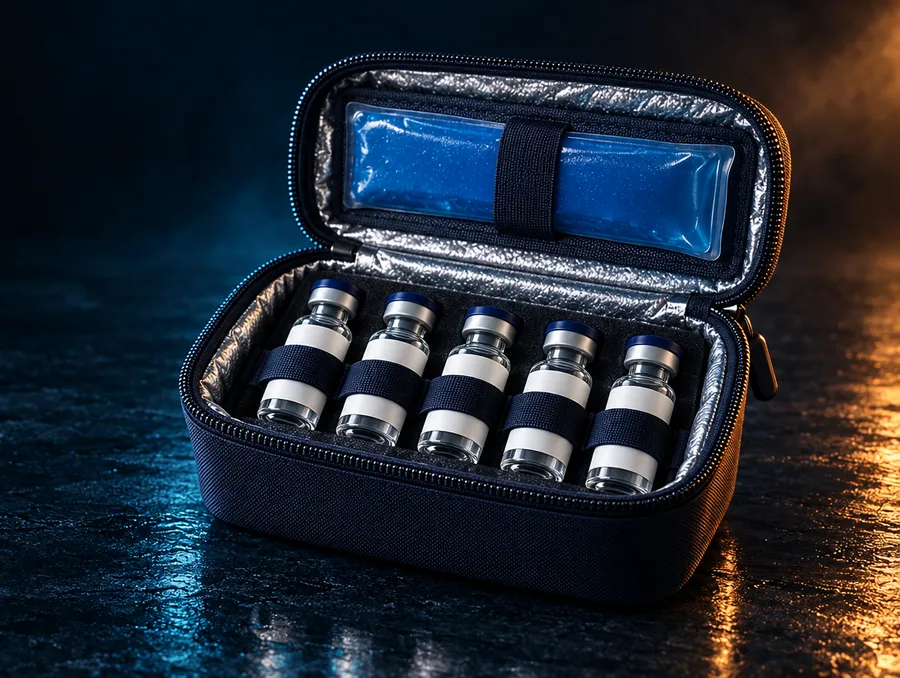
Insulated vial travel coolers and cases
Insulated or evaporative cases that keep vials cool away from a refrigerator.
- Check the stated temperature band: refrigerated-range cases (2–8 °C / 36–46 °F) use frozen gel packs, while evaporative wallets only hold roughly 18–26 °C and are not a substitute for refrigeration.
- Compare the published hold time and the ambient temperature it was tested at; real-world duration drops in heat and with frequent opening.
- Measure your containers against the interior dimensions or capacity listed, and keep a little room for an ice pack and padding.
- Look for a separate barrier between frozen packs and contents so nothing sits directly against a frozen surface.
- Consider pairing the case with a small logging thermometer if you need a record of temperatures in transit.
- 4AllFamilyNomad Portable Cooling Case
Passive insulated case with an included reusable Biogel freeze pack, rated by the maker to hold 2–8 °C for about 26–33 hours depending on size and ambient temperature.
4AllFamily (manufacturer) · $39.99 (seen 2026-10-23)View Nomad Portable Cooling Case at 4AllFamily (manufacturer) (opens in a new tab) - 4AllFamilyChiller Cooling Pouch
Water-activated evaporative pouch that the maker says keeps contents at about 18–26 °C for 45+ hours with no power or freezer.
4AllFamily (manufacturer) · $26.99 (seen 2026-10-23)View Chiller Cooling Pouch at 4AllFamily (manufacturer) (opens in a new tab) - FRIOFRIO Individual Cooling Wallet
Evaporative cooling wallet activated in cold water, rated to hold 18–26 °C for at least 45 hours in ambient temperatures up to 37.8 °C; inner size about 18 × 6 cm.
Diabetes UK Shop · £19.14 (seen 2026-10-23)View FRIO Individual Cooling Wallet at Diabetes UK Shop (opens in a new tab) - MedicoolInsulin Protector Case
Insulated 8 × 4 × 3 in case with two freezer cooler packs, rated by the maker for 2–8 °C for up to 16 hours.
Medicool (manufacturer) · $33.15 (seen 2026-10-23)View Insulin Protector Case at Medicool (manufacturer) (opens in a new tab)
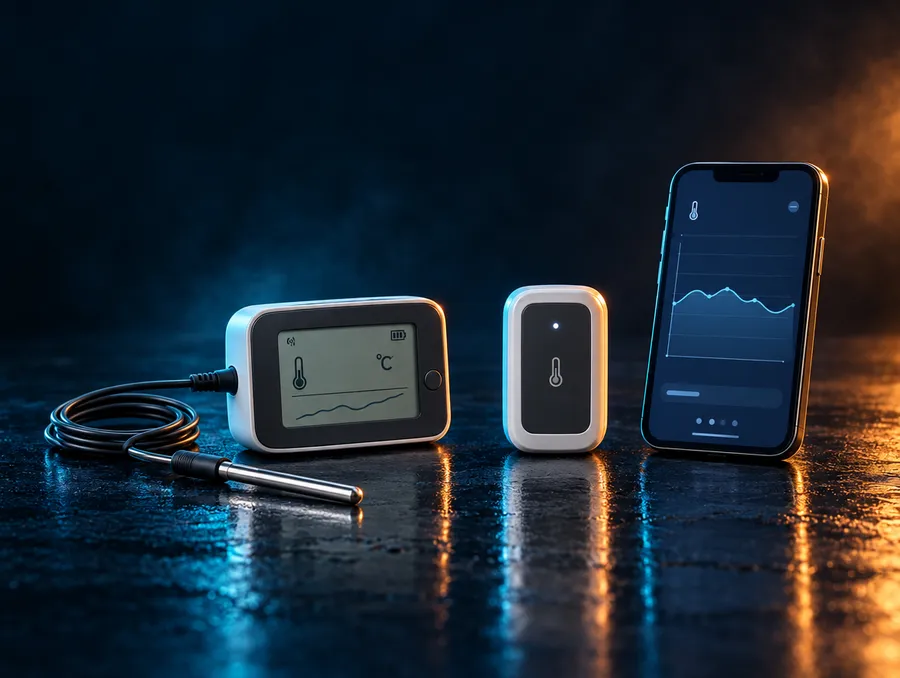
Fridge thermometers and temperature data loggers
A thermometer or logger confirms the storage temperature you think you have.
- Check the stated accuracy (for example ±0.3–0.5 °C) and whether a calibration certificate (NIST-traceable) is included.
- Prefer a probe-type sensor, ideally in a buffered or glycol bottle, if you want readings that track product temperature rather than brief air swings when the door opens.
- Look for adjustable high and low alarms and decide whether you need an on-device audible alarm, phone alerts, or both (Wi‑Fi alerts work away from home; Bluetooth only nearby).
- Min/max memory or exportable logging (CSV) lets you check what happened overnight or while you were away.
- Note battery type and life, and how the unit warns of a low battery.
- GoveeWi‑Fi Thermo-Hygrometer H5179
Wi‑Fi temperature/humidity sensor with ±0.3 °C stated accuracy, app range alerts, about 2 years of exportable data history, powered by 3 AA batteries.
Govee (manufacturer) · $74.99 (multi-pack options listed) (seen 2026-10-23)View Wi‑Fi Thermo-Hygrometer H5179 at Govee (manufacturer) (opens in a new tab) - INKBIRDIBS-TH2 Bluetooth Thermometer
Bluetooth logging sensor with typical ±0.3 °C accuracy, app high/low alerts and onboard data storage with export, powered by 2 AAA batteries.
INKBIRD (manufacturer) · $15.99 (temperature) / $24.99 (temp + humidity) (seen 2026-10-23)View IBS-TH2 Bluetooth Thermometer at INKBIRD (manufacturer) (opens in a new tab) - ThermoWorksFridge/Freezer Alarm Thermometer RT8100
Dual-probe display thermometer with programmable high/low audible alarms per channel, min/max memory and an alarm-duration counter; runs on 2 AAA batteries.
ThermoWorks (manufacturer) · $35.00 (seen 2026-10-23)View Fridge/Freezer Alarm Thermometer RT8100 at ThermoWorks (manufacturer) (opens in a new tab) - ThermoWorksThermaGuard Certified Fridge/Freezer Alarm
External-probe alarm thermometer with ±0.4 °C stated accuracy, NIST-traceable calibration certificate, 82 dB adjustable high/low alarm and min/max display.
ThermoWorks (manufacturer) · $129.00 (seen 2026-10-23)View ThermaGuard Certified Fridge/Freezer Alarm at ThermoWorks (manufacturer) (opens in a new tab)
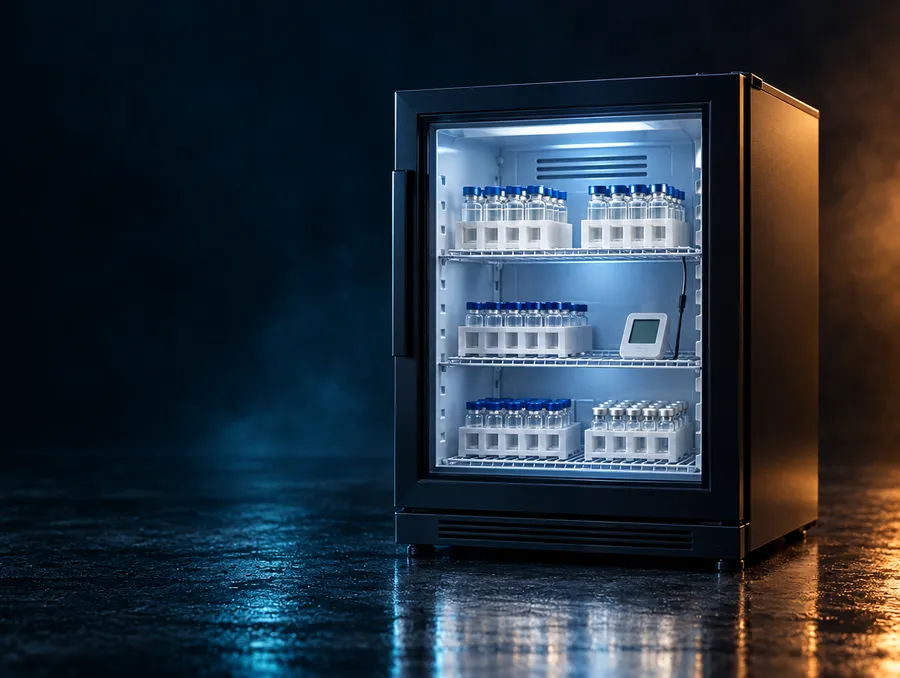
Compact refrigerators for dedicated cold storage
A dedicated small refrigerator keeps vials away from frequent door openings and food.
- Pharmaceutical/medical-grade units (e.g. Accucold, Danby Health) are built to hold 2–8 °C with fan circulation, digital control and alarms; consumer mini-fridges use mechanical dials and swing more.
- An all-refrigerator (no freezer compartment) generally holds a steadier temperature than a mini-fridge with an internal freezer box.
- Look for a built-in high/low alarm and external display, or plan to add a separate alarm thermometer.
- Check capacity, door lock and auto-defrost, and avoid storing items against the back wall or in door shelves where temperature varies most.
- Place it away from heat sources and allow the stated ventilation clearance.
- Summit Appliance (Accucold)Accucold FF28LWHMED2 Compact All-Refrigerator
2.4 cu ft medical/lab all-refrigerator held at 2–8 °C with digital thermostat, NIST-calibrated min/max display, audible high/low alarm, internal fan, auto defrost and keyed lock.
Summit Appliance (manufacturer)View Accucold FF28LWHMED2 Compact All-Refrigerator at Summit Appliance (manufacturer) (opens in a new tab) - DanbyDanby Health DH032A1W 3.2 cu ft Medical Fridge
3.2 cu ft medical refrigerator with a 2–8 °C range, high/low temperature alarm and keyed lock.
- DanbyDanby 3.3 cu ft Contemporary Classic Compact Fridge DAR033A6MDB
Consumer 3.3 cu ft compact all-refrigerator (no freezer compartment) with a mechanical thermostat covering about 0–10 °C.
- FrigidaireFrigidaire 3.1 cu ft 2-Door Mini Refrigerator EFR382
Consumer 3.1 cu ft compact refrigerator with a separate-door freezer section and adjustable cooling settings.
The Home Depot · $199.00 (seen 2026-10-23)View Frigidaire 3.1 cu ft 2-Door Mini Refrigerator EFR382 at The Home Depot (opens in a new tab)
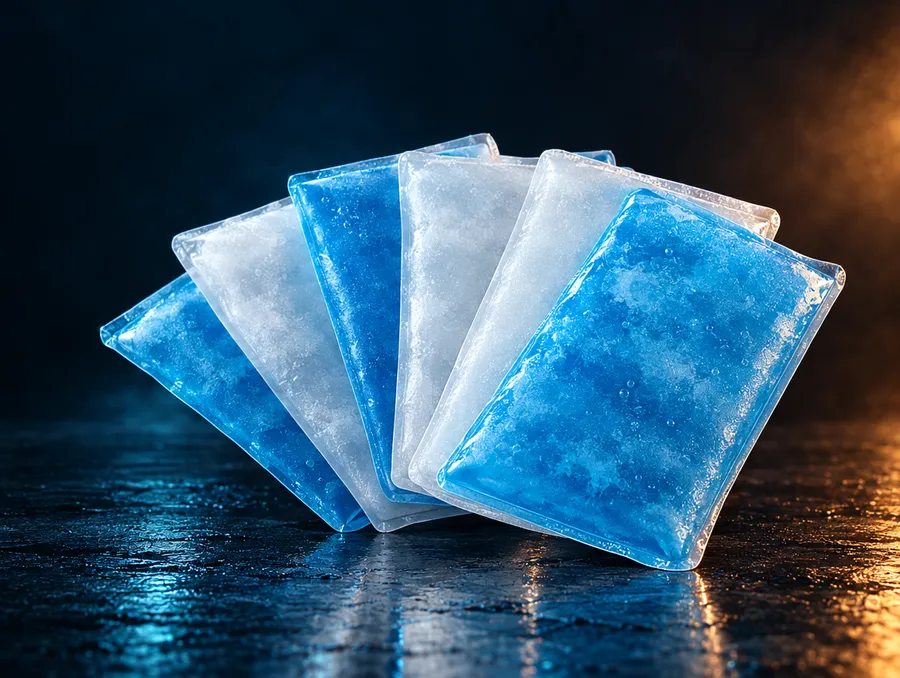
Reusable ice packs and gel packs
Reusable cold packs for transport cases and short trips.
- Match the pack size to your cooler; several small packs often fit and perform better than one large one.
- Check the phase-change or freeze point: water-based gel packs sit near 0 °C, while some 'colder than ice' packs run well below freezing and can over-chill contents.
- Use a barrier (cloth, foam or cardboard) between a frozen pack and anything that should not freeze.
- Look for puncture-resistant film or hard shells and non-toxic contents.
- Some packs need conditioning (e.g. a short soak after freezing) to avoid sub-zero temperatures; follow the maker's instructions.
- ThermoSafePolar Pack Refrigerant Gel Packs
Non-toxic, reusable gel and foam-brick refrigerants for shipping temperature-sensitive materials, with a 0 °C phase change and several sizes from 3 oz up.
Thomas Scientific · $23.44 per case of 24 (8 × 5.5 × 1.25 in, PP24CHIM) (seen 2026-10-23)View Polar Pack Refrigerant Gel Packs at Thomas Scientific (opens in a new tab) - RubbermaidBlue Ice Weekender Ice Pack
Rigid reusable hard-shell ice pack for coolers and lunch bags.
The Home Depot · $4.63 (seen 2026-10-23)View Blue Ice Weekender Ice Pack at The Home Depot (opens in a new tab) - 4AllFamilyBuddy Medium Biogel Ice Pack
Replacement Biogel freeze pack sized for 4AllFamily Nomad, Companion, Voyager and Explorer coolers.
4AllFamily (manufacturer) · $24.99 (seen 2026-10-23)View Buddy Medium Biogel Ice Pack at 4AllFamily (manufacturer) (opens in a new tab) - MedicoolInsulin Protector Case Cooler (replacement pack)
Freezer-safe replacement cooler pack for the Medicool Insulin Protector Case, rated by the maker for up to 12 hours.
Medicool (manufacturer) · $13.15 (seen 2026-10-23)View Insulin Protector Case Cooler (replacement pack) at Medicool (manufacturer) (opens in a new tab)
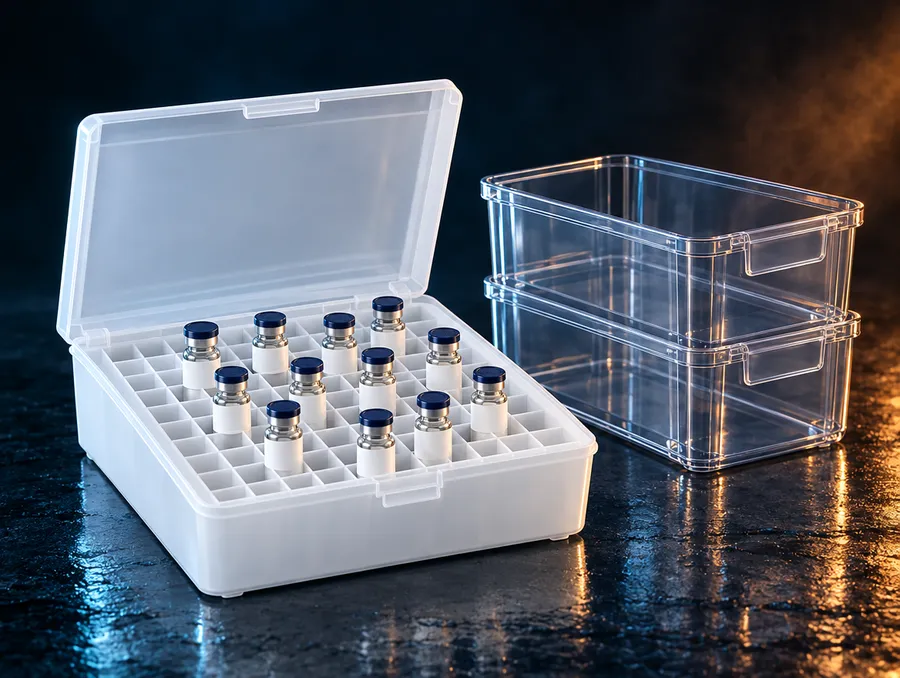
Vial storage boxes, racks and fridge bins
Boxes, dividers and bins that keep vials upright, separated and easy to find.
- Measure vial diameter and height (including cap) and pick a box or divider whose cell size and box height fit.
- For freezer use, choose materials rated for low temperatures (polycarbonate, polypropylene or coated fiberboard).
- Grid-numbered boxes and lids make it easier to keep an inventory and find items quickly with the door open briefly.
- A clear bin or tray keeps items together and off the fridge door and back wall, where temperature varies most.
- Check that the box fits your fridge shelf height and stacks securely.
- FisherbrandFisherbrand Cryo/Freezer Box, 5 × 5 × 2 in (81-cell)
Moisture-repellent coated fiberboard storage box, 5 × 5 × 2 in, supplied with an 81-cell divider.
Fisher Scientific · $23.30 each (list) (seen 2026-10-23)View Fisherbrand Cryo/Freezer Box, 5 × 5 × 2 in (81-cell) at Fisher Scientific (opens in a new tab) - FisherbrandFisherbrand Dividers for Cryo/Freezer Boxes (25-cell)
Replacement dividers in 16- to 144-cell layouts for Fisherbrand freezer boxes, accommodating containers 9.8–33.5 mm in diameter.
Fisher Scientific · $28.00 each (list) (seen 2026-10-23)View Fisherbrand Dividers for Cryo/Freezer Boxes (25-cell) at Fisher Scientific (opens in a new tab) - Thermo Scientific (Nalgene)Thermo Scientific Nalgene CryoBox (81-place, polycarbonate)
Autoclavable polycarbonate box, 5.25 × 5.25 × 2 in, holding 81 tubes of 1.2–2 mL in a 9 × 9 grid, rated −196 °C to +121 °C.
Fisher Scientific · $188.60 per pack of 4 (list) (seen 2026-10-23)View Thermo Scientific Nalgene CryoBox (81-place, polycarbonate) at Fisher Scientific (opens in a new tab) - iDesigniDesign Stackable Compact Crisp Produce Bin
Clear, BPA-free stackable plastic fridge bin, about 15.8 × 6.3 × 3.8 in (1.62 gal).
Kohl's · $17.09 (sale; reg. $18.99) (seen 2026-10-23)View iDesign Stackable Compact Crisp Produce Bin at Kohl's (opens in a new tab)
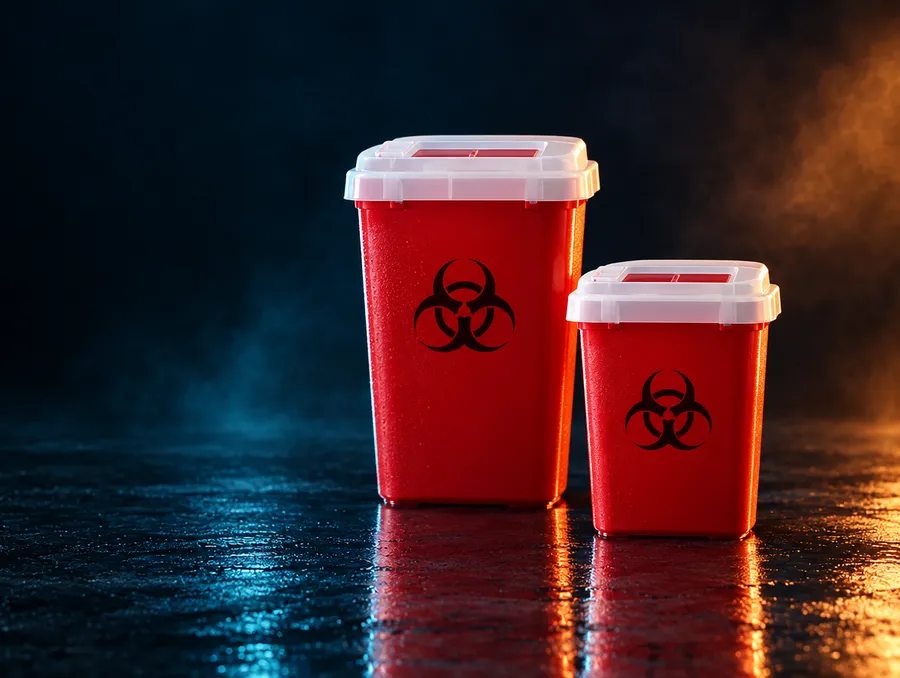
Sharps disposal containers
Puncture-resistant containers for used needles, including mail-back options.
- Choose an FDA-cleared, puncture-resistant container with a lid that locks permanently for final disposal.
- A one-way or tortuous-path opening reduces the chance of items coming back out.
- Size it to how much you use; replace when it reaches the fill line rather than overfilling.
- Mail-back systems include prepaid shipping and disposal documentation, which helps where local drop-off is limited.
- Check your state or local rules for household sharps disposal (FDA and safeneedledisposal.org list options).
- Cardinal HealthSharpSafety Autodrop Phlebotomy Container, 1 qt
Compact 1-quart polypropylene sharps container with a clear top to monitor fill level and temporary and final locking closures.
Carewell · $4.37 (seen 2026-10-23)View SharpSafety Autodrop Phlebotomy Container, 1 qt at Carewell (opens in a new tab) - DynarexDynarex Sharps Container, Slide Lid, 1 qt
Puncture-resistant 1-quart red polypropylene container with a transparent slide lid and a final locking mechanism.
Bound Tree Medical · $4.89 each (list) (seen 2026-10-23)View Dynarex Sharps Container, Slide Lid, 1 qt at Bound Tree Medical (opens in a new tab) - Stericycle1.4 Quart Sharps Disposal Mailback System
Mail-back kit with a 1.4-quart sharps container, prepaid labels and proof of destruction, meeting USPS requirements for mailing sharps waste.
Stericycle (manufacturer store) · $50.55 (seen 2026-10-23)View 1.4 Quart Sharps Disposal Mailback System at Stericycle (manufacturer store) (opens in a new tab) - Sharps AssureSharps Assure Locking Mail Back Sharps Container, 1 qt
1-quart locking sharps container with liner, prepaid return carton, tracking manifest and certificate of destruction.
Staples · $50.99 (seen 2026-10-23)View Sharps Assure Locking Mail Back Sharps Container, 1 qt at Staples (opens in a new tab)
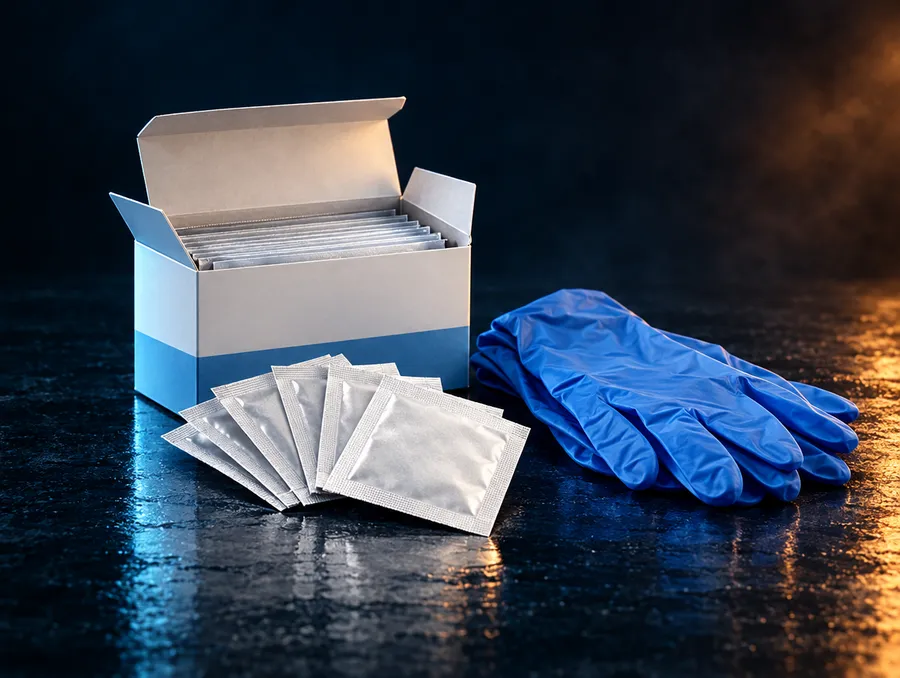
Alcohol prep pads and nitrile gloves
Basic aseptic supplies for handling vials.
- Alcohol pads: look for 70% isopropyl alcohol, individually sealed sterile packets, and a size suited to wiping vial stoppers and work surfaces.
- Gloves: choose powder-free nitrile (latex-free) and check the size chart; a snug fit improves dexterity.
- Exam-grade gloves are tested to medical-glove standards; 'work' or 'utility' grade gloves are not.
- Glove thickness (about 3–5 mil) trades dexterity for durability.
- Buy box sizes you will use before the packets dry out or gloves age.
- MedlineMedline Alcohol Prep Pads (box of 200)
Sterile, individually packaged medium (about 1.2 × 2.4 in) prep pads saturated with 70% isopropyl alcohol.
WellBefore · $6.98 (seen 2026-10-23)View Medline Alcohol Prep Pads (box of 200) at WellBefore (opens in a new tab) - DynarexDynarex Sterile Alcohol Pads, 200/box, 10 boxes
Gamma-sterilized 70% isopropyl alcohol pads sealed in individual airtight pouches; 2,000 pads per pack.
Quill · $51.39 per 10-box pack (seen 2026-10-23)View Dynarex Sterile Alcohol Pads, 200/box, 10 boxes at Quill (opens in a new tab) - AmmexAmmex Professional Series Nitrile Exam Gloves, 100/box
Powder-free, latex-free exam-grade nitrile gloves, 3 mil palm / 4 mil finger, 100 per box.
Quill · $16.79 (seen 2026-10-23)View Ammex Professional Series Nitrile Exam Gloves, 100/box at Quill (opens in a new tab) - SilverbackSilverback 3.5 mil Nitrile Disposable Gloves, 100/box
Latex-free 3.5 mil blue nitrile disposable gloves, 100 per box.
The Home Depot · $24.98 (seen 2026-10-23)View Silverback 3.5 mil Nitrile Disposable Gloves, 100/box at The Home Depot (opens in a new tab)
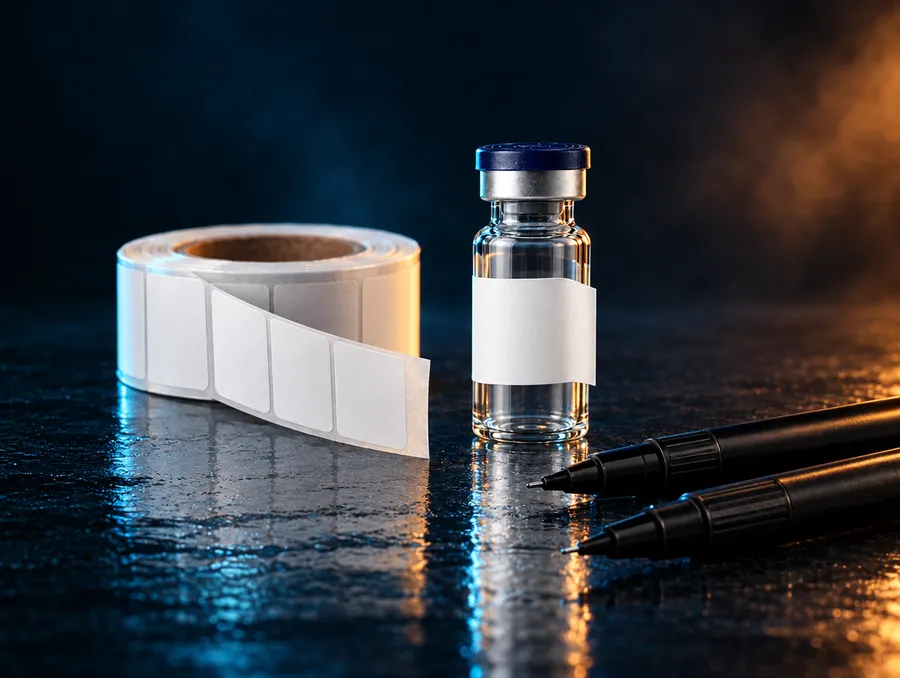
Labels and markers for vials
Labels and pens that stay legible in a cold, damp refrigerator.
- Choose labels rated for your storage range (refrigerator, −20 °C, −80 °C or cryogenic) and for application to cold surfaces if needed.
- Look for resistance to water, condensation and alcohol wipes so writing and adhesive survive cleaning.
- Match the label format to your printer (laser vs thermal transfer); laser-only labels can jam inkjets.
- Small round spots or narrow wrap-around labels fit vial caps and small barrels.
- Use fine-tip permanent markers that resist smearing from water and alcohol.
- LabTAGCryo-LazrTAG Permanent Cryo Laser Labels, 2.63 × 1 in (CLA-3)
Laser-printable waterproof labels rated −196 °C to +120 °C (dry heat), resistant to isopropanol, ethanol and sanitizing wipes; 30 per US Letter sheet.
LabTAG (manufacturer) · $66.80 per pack of 480 (seen 2026-10-23)View Cryo-LazrTAG Permanent Cryo Laser Labels, 2.63 × 1 in (CLA-3) at LabTAG (manufacturer) (opens in a new tab) - Diversified BiotechTough-Spots, 3/8 in diameter
3/8 in (9.5 mm) round polyolefin labels that accept any marking instrument, rated about −196 °C to +80/100 °C and resistant to solvents and humidity.
Genesee Scientific · $233.40 per 5,000 (white) (seen 2026-10-23)View Tough-Spots, 3/8 in diameter at Genesee Scientific (opens in a new tab) - SharpieSharpie Ultra Fine Point Permanent Markers, Black, 12-pack
Ultra-fine-tip permanent markers for writing on plastic, glass and labels; 12 per pack.
Staples · $10.49 (sale; reg. $13.99) (seen 2026-10-23)View Sharpie Ultra Fine Point Permanent Markers, Black, 12-pack at Staples (opens in a new tab) - FisherbrandFisherbrand Fine Tip Marking Pens, pack of 10
Quick-drying fine-tip lab markers, permanent on plastic, metal and ceramic, that resist smearing from water and alcohol.
Fisher Scientific · $74.90 per 10 (web promo) (seen 2026-10-23)View Fisherbrand Fine Tip Marking Pens, pack of 10 at Fisher Scientific (opens in a new tab)
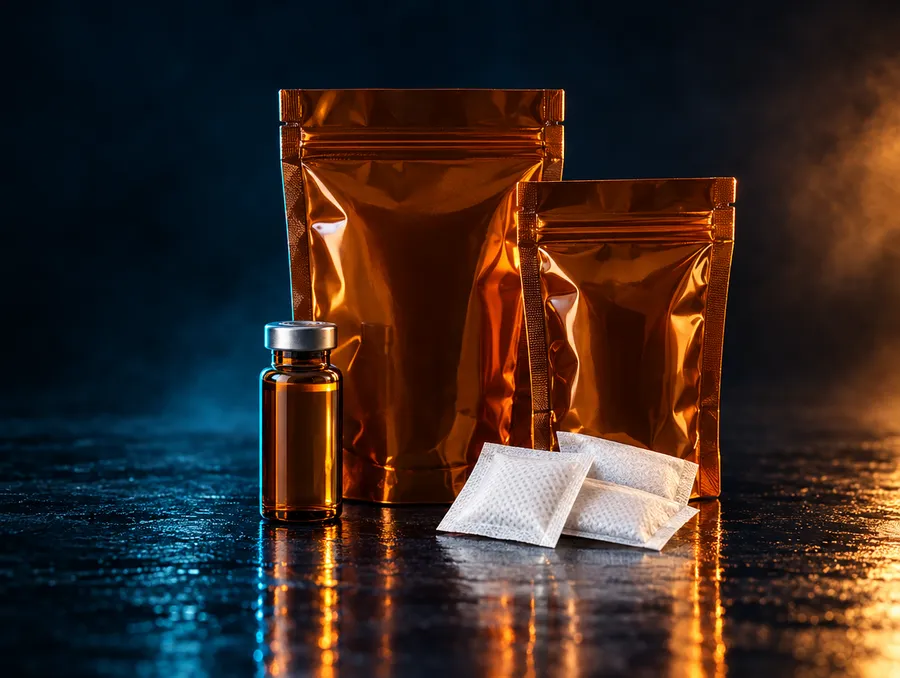
Light-blocking storage and desiccants
Light-blocking bags and desiccants for light- and moisture-sensitive materials.
- Amber UV-protective bags are commonly specified to block at least 90% of light from 290–450 nm (USP light-transmission test); check the stated spec.
- Pick a bag thickness (about 3 mil) and zipper closure that can be reopened and resealed.
- An opaque box or the original carton also blocks light inside the fridge.
- Indicating silica gel changes color when saturated, so you know when to replace or regenerate it.
- Use small desiccant packets sized to the container; keep them in a sealed bag or box, since an open fridge will saturate them quickly.
- LavexLavex 6 × 8 in UV-Protective Reclosable Amber Bags (1,000/case)
3 mil amber LDPE zipper bags designed to block over 90% of light between 290 and 450 nm.
WebstaurantStore · $50.99 per case of 1,000 (seen 2026-10-23)View Lavex 6 × 8 in UV-Protective Reclosable Amber Bags (1,000/case) at WebstaurantStore (opens in a new tab) - Elkay PlasticsLK Reclosable UV Protection Bag, 6 × 8 in, Amber
3 mil amber LDPE zipper bags for protecting light-sensitive contents.
WellBefore · $13.98 per pack (seen 2026-10-23)View LK Reclosable UV Protection Bag, 6 × 8 in, Amber at WellBefore (opens in a new tab) - MinigripUV Guard UV Protection Bag
3 mil amber zipper bags with UV blocker meeting USP light-transmission limits (≤10% from 290–450 nm), in 4 × 6, 6 × 8 and 8 × 14 in sizes.
Thomas Scientific · $75.09 per 1,000 (4 × 6 in) (seen 2026-10-23)View UV Guard UV Protection Bag at Thomas Scientific (opens in a new tab) - Dry & Dry5 Gram Orange Indicating Silica Gel Packets (PET)
5 g silica gel packets (2 × 2.9 in) that change from orange (dry) to dark green (saturated) and can be regenerated in an oven or microwave.
Dry & Dry (manufacturer) · from $9.99 (seen 2026-10-23)View 5 Gram Orange Indicating Silica Gel Packets (PET) at Dry & Dry (manufacturer) (opens in a new tab)

Bound lab notebooks (optional)
A bound paper record alongside, or instead of, a digital notebook.
- Choose a sewn or stitched binding so pages cannot be removed unnoticed.
- Pre-numbered pages make it easy to reference and date entries in order.
- Grid (quad) ruling helps with tables and sketches.
- Carbonless duplicate pages give you a removable copy while the original stays bound.
- Write in permanent ink and date every entry.
- National BrandNational Brand Computation Notebook, Quad, 75 Sheets (43648)
9.25 × 11.75 in bound notebook with 75 sheets (150 consecutively numbered pages) of 4 × 4 quad-ruled green Eye-Ease paper.
Staples · $24.59 (seen 2026-10-23)View National Brand Computation Notebook, Quad, 75 Sheets (43648) at Staples (opens in a new tab) - National BrandNational Brand Laboratory Notebook, Quad, 200 Sheets (43649)
Stitched notebook with 100 numbered carbonless duplicate sets (white original, yellow perforated copy) on 4 × 4 quad ruling.
Staples · $37.19 (seen 2026-10-23)View National Brand Laboratory Notebook, Quad, 200 Sheets (43649) at Staples (opens in a new tab)
Working with the vials themselves?
The reconstitution guide covers general lab steps, syringe units and storage after mixing.