Reconstituting a lyophilized vial
General laboratory steps that apply to any freeze-dried vial, with the arithmetic, syringe units and storage. Nothing here depends on what is in the vial.
Watch the handling
Supplies
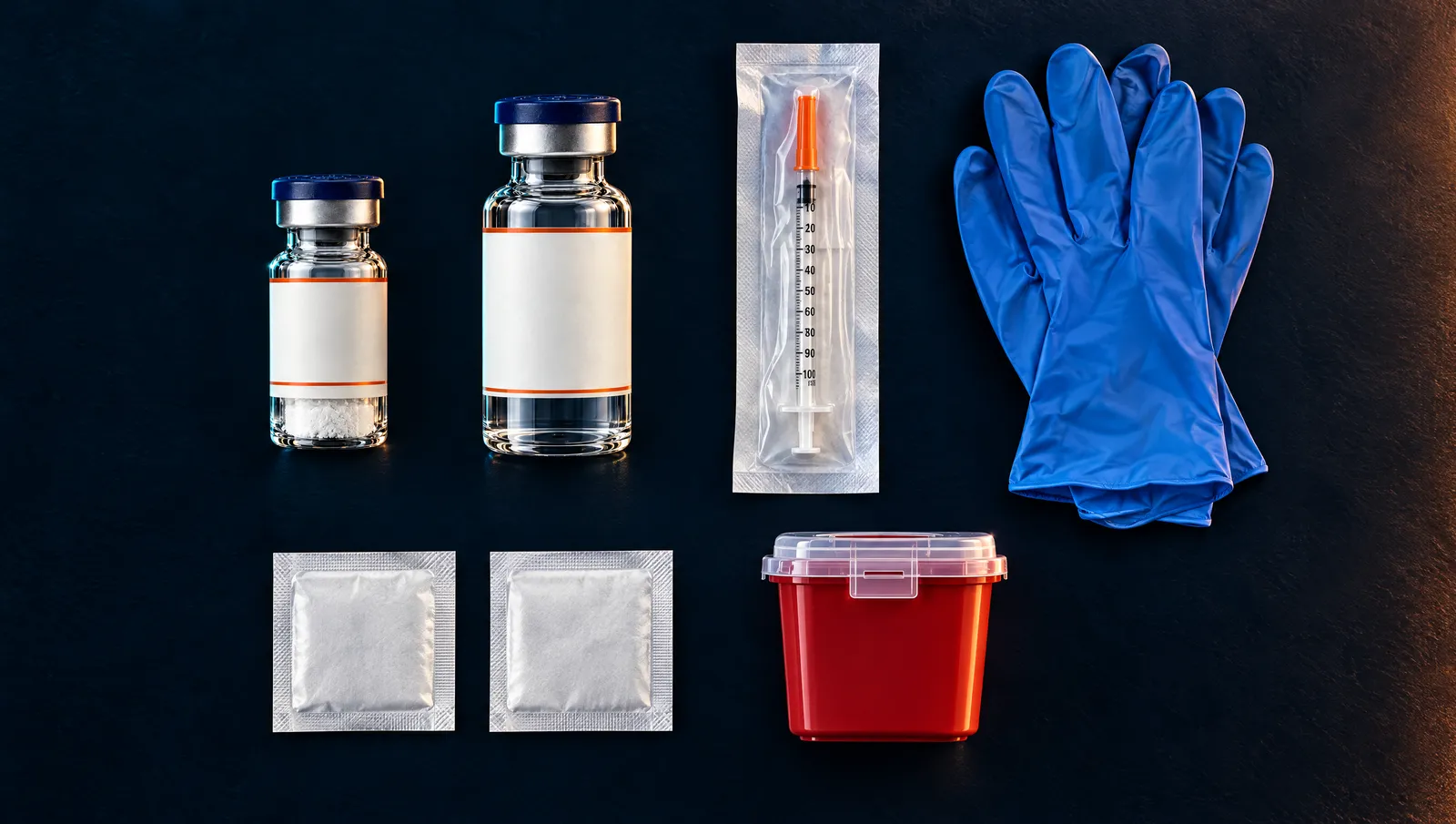
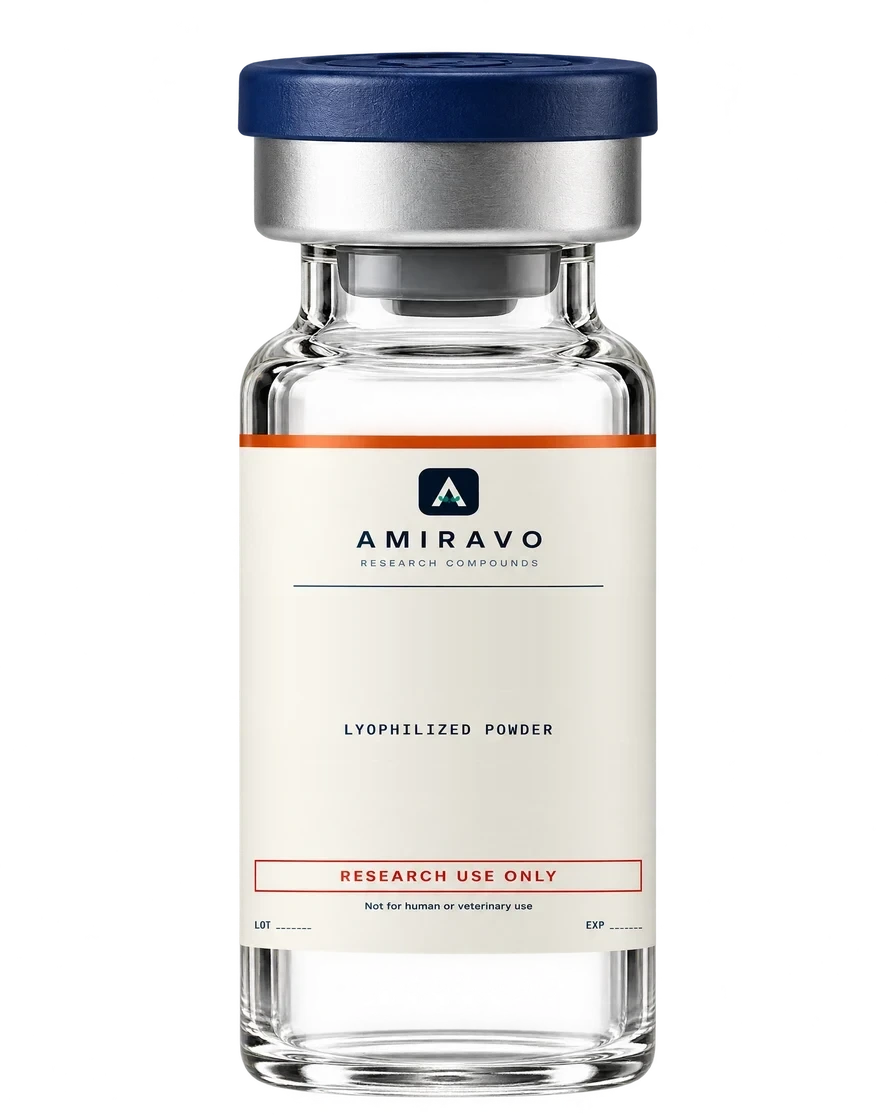
- Lyophilized vialSealed vial with the freeze-dried cake. Check the label, lot and the certificate of analysis before opening.
- Sterile diluentThe diluent named on the product documentation. Bacteriostatic water contains benzyl alcohol; sterile water does not.
- Graduated syringesSized to the volume being measured. U-100 insulin syringes are graduated in units where 100 units = 1 mL.
- Alcohol prep padsFor wiping vial stoppers before each puncture.
- Nitrile glovesClean gloves for aseptic handling.
- Sharps containerPuncture-resistant container for used needles.
- Labels and a fine markerRecord contents, concentration and the date of reconstitution on the vial.
- Refrigerator thermometerConfirms cold storage stays within the range the documentation gives.
The steps
 Step 1
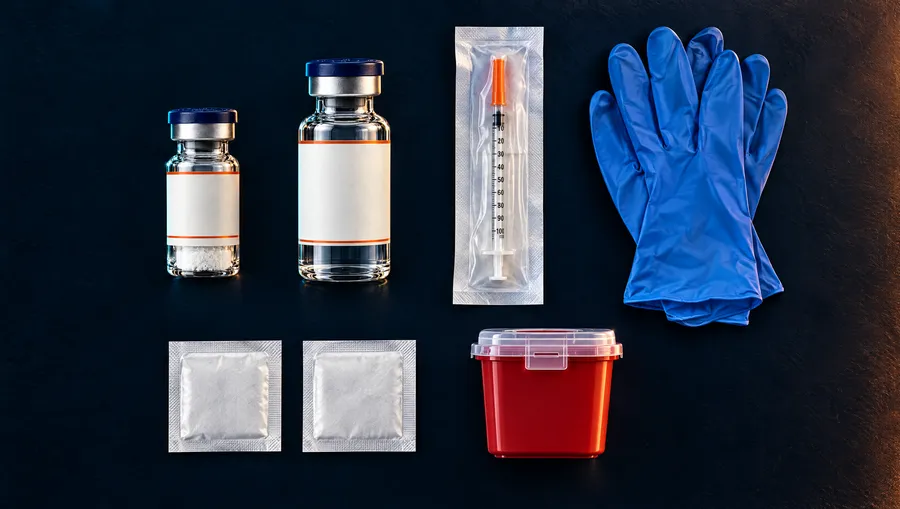
Prepare a clean workspace
Wash hands, put on clean gloves and lay out the supplies on a clean surface. Let a refrigerated vial reach room temperature so condensation does not form on the stopper.
 Step 2
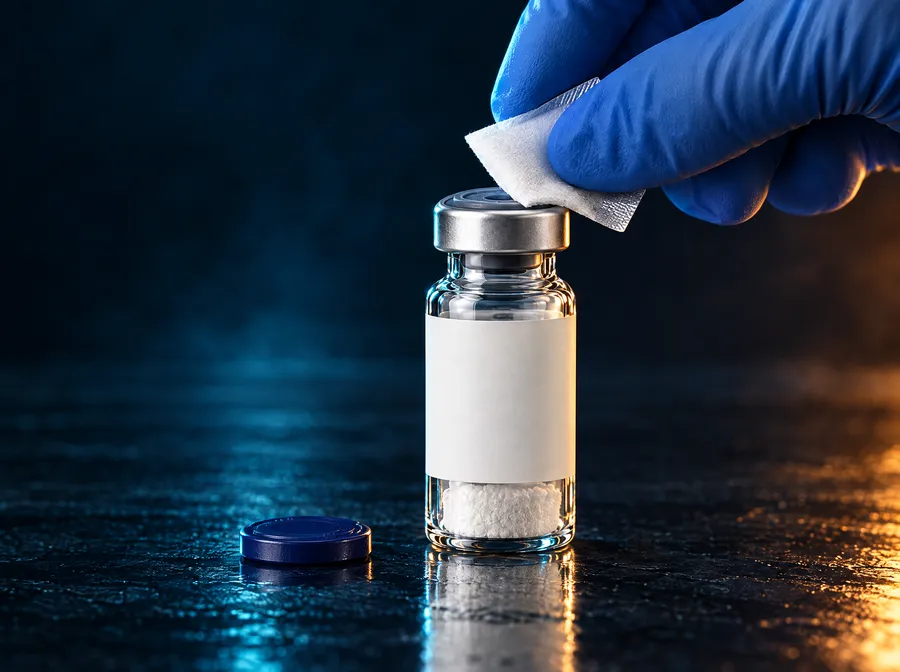
Wipe both stoppers
Pop off the small plastic flip caps (the aluminum crimp ring stays on) and wipe each exposed rubber stopper with a fresh alcohol pad. Let them air-dry. Flip caps cannot be put back once removed.
 Step 3
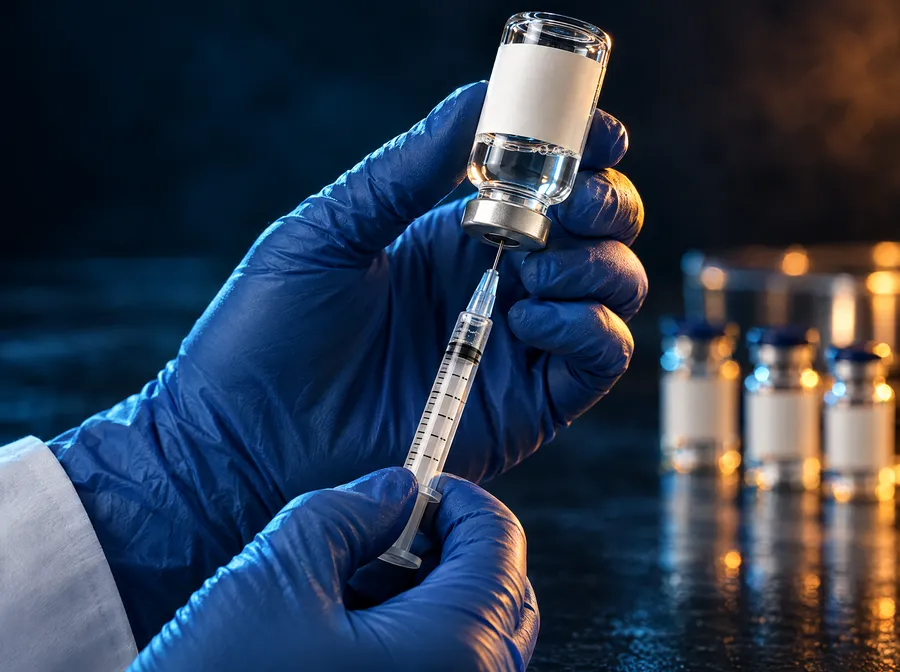
Draw the diluent
Insert a new sterile needle through the center of the diluent vial's rubber stopper, turn the vial upside down and draw the volume you chose; the needle stays in the stopper the whole time. Use the calculator to see what concentration that volume gives.
 Step 4
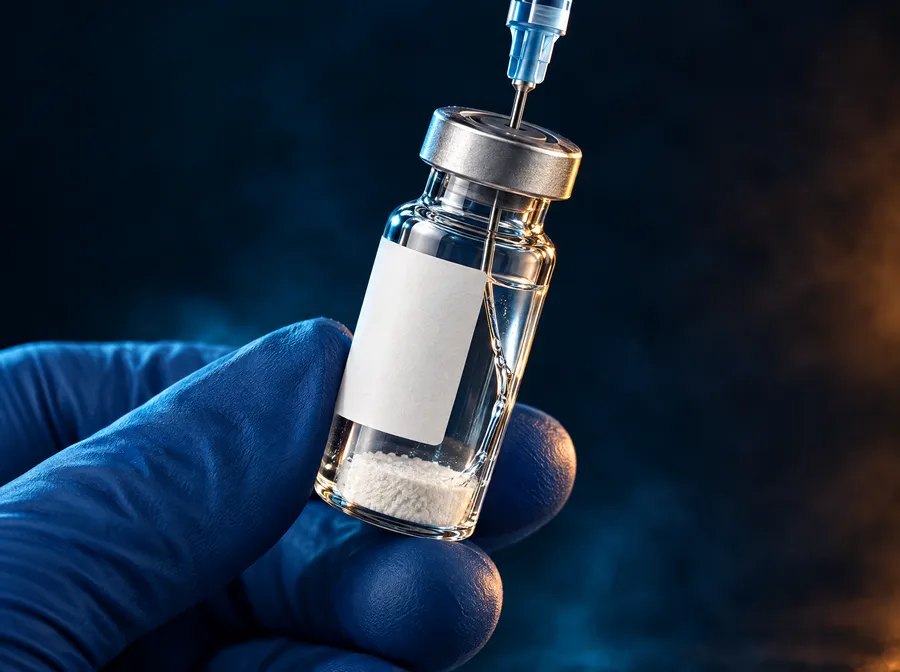
Add it slowly down the wall
Insert the needle straight down through the center of the powder vial's rubber stopper. Tilt the vial and angle the needle tip toward the inside glass wall so the diluent runs gently down the wall rather than onto the cake. A vacuum in the vial may pull liquid in; control the plunger, then withdraw the needle straight up.
 Step 5
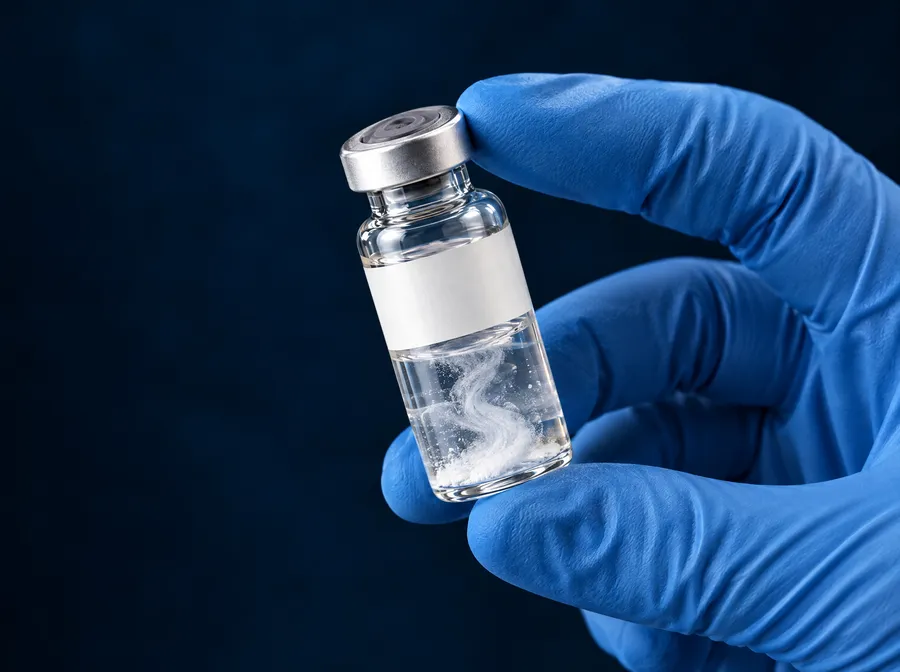
Swirl, do not shake
Gently roll or swirl the vial until the cake dissolves. Shaking can foam the solution and may damage some peptides. Inspect: the solution should be clear, without particles.
 Step 6
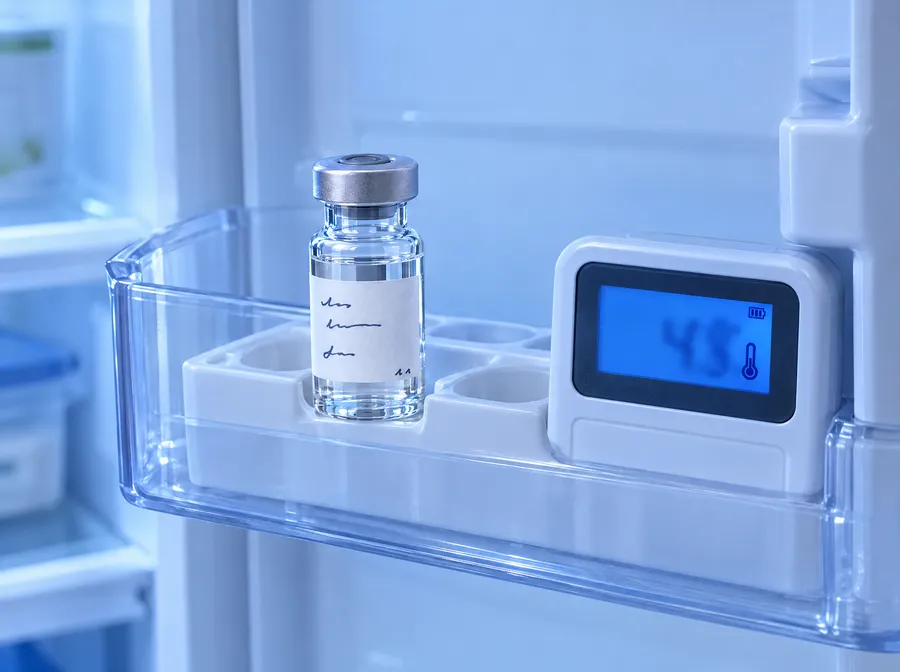
Label and refrigerate
Write the concentration and date on the label, store as the documentation directs (usually refrigerated, protected from light) and discard used sharps in a sharps container.
The arithmetic
Concentration = mass in the vial ÷ volume of diluent. Everything else follows from that.
- Concentration
- 5 mg/mL
- 5,000 mcg/mL
- In 10 units (0.1 mL)
- 500 mcg
- In 1 unit (0.01 mL)
- 50 mcg
Computed from your inputs. Not a dose. Verify before use.
| Units (U-100) | 5 | 10 | 20 | 25 | 50 | 100 |
|---|---|---|---|---|---|---|
| mL | 0.05 | 0.1 | 0.2 | 0.25 | 0.5 | 1 |
| mcg | 250 | 500 | 1,000 | 1,250 | 2,500 | 5,000 |
Arithmetic on the numbers selected. A unit is a volume mark (100 units = 1 mL), not an amount of compound. General reconstitution steps · Full calculator
Micrograms in 10 units, common combinations
| Vial \ diluent | 1 mL | 2 mL | 3 mL | 5 mL |
|---|---|---|---|---|
| 2 mg | 200 mcg / 10 u | 100 mcg / 10 u | 66.67 mcg / 10 u | 40 mcg / 10 u |
| 5 mg | 500 mcg / 10 u | 250 mcg / 10 u | 166.7 mcg / 10 u | 100 mcg / 10 u |
| 10 mg | 1,000 mcg / 10 u | 500 mcg / 10 u | 333.3 mcg / 10 u | 200 mcg / 10 u |
| 20 mg | 2,000 mcg / 10 u | 1,000 mcg / 10 u | 666.7 mcg / 10 u | 400 mcg / 10 u |
Reading a U-100 syringe
- 100 units = 1 mL; 50 units = 0.5 mL; 10 units = 0.1 mL; 1 unit = 0.01 mL.
- 0.3 mL syringes are usually marked every half or one unit; 1 mL syringes every two units.
- A unit is a volume, not an amount of compound. The amount in a given volume depends on the concentration you made.
Storage after reconstitution
- Lyophilized (unmixed) vials: typically stored cold and dry, away from light, as the documentation directs. Many are stable longer frozen.
- Reconstituted vials: typically refrigerated (about 2–8 °C), protected from light and not frozen.
- Bacteriostatic water contains benzyl alcohol, which inhibits bacterial growth in multi-use vials; sterile water has no preservative.
- Transport: an insulated case with a cold pack keeps vials cool; avoid direct contact between ice packs and glass.
- Keep a fridge thermometer next to the vials; household refrigerators can swing several degrees.
Mistakes and troubleshooting
- Added the wrong volume of diluent
- The concentration changes, not the amount of compound in the vial. Recalculate with the volume actually added and relabel the vial.
- Shook the vial and it foamed
- Let it settle in the refrigerator. Foam is a sign of agitation; some peptides aggregate when shaken. Note it on the label.
- The solution is cloudy or has particles
- Do not use it. Cloudiness can indicate incomplete dissolution, contamination or degradation. Record the lot and contact the supplier with the certificate of analysis.
- The powder cake looks melted or shrunken before reconstitution
- This can indicate the vial was exposed to heat or moisture. Record the lot and condition on arrival.
- Liquid sprayed back when the needle was removed
- Pressure built up in the vial. Withdraw a small volume of air while adding diluent to keep pressure neutral.
- Confused units with mL
- On a U-100 syringe, 100 units = 1 mL and 10 units = 0.1 mL. A unit is a volume mark, not an amount of compound.
- Froze a reconstituted vial
- Freeze–thaw cycles can degrade peptides in solution. Follow the documentation; most reconstituted vials are kept refrigerated, not frozen.
- Lost track of when it was mixed
- Always date the label. Stability after reconstitution is limited and differs between compounds and diluents.