Peptide blend calculator
Enter each compound and its milligrams, then the diluent volume. Every component shares the same volume, so each one gets its own concentration and its own amount per unit.
These tools do not provide dosing guidance and are not for human or veterinary use. They are for research-use laboratory calculations only. Verify every result independently.
Blend: each component's concentration
Two to four compounds in one vial, one shared diluent volume.
100 units = 1 mL
each component (mg/mL) = its mg ÷ shared diluent (mL) · amount in a draw = concentration × volume drawn
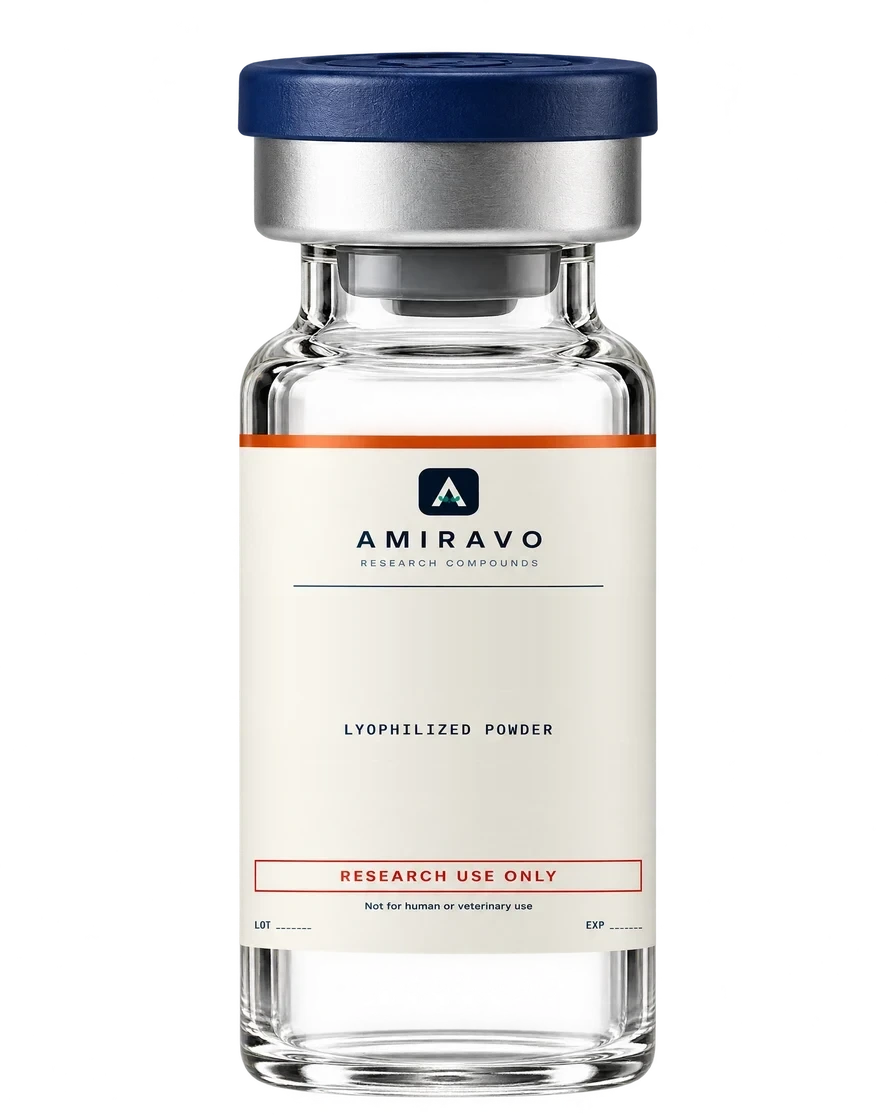
Vial fills as you type
How it works
A blended vial holds more than one compound in a single cake. Once diluent is added, every component is dissolved in the same volume, so each has its own concentration: its own milligrams divided by the shared millilitres.
Any volume drawn from the vial therefore carries all of the components at once, in fixed proportion. The calculator shows that proportion so it is never confused with a single-compound vial of the same total mass.
Step by step
- List each component and its mass in milligrams, as printed on the label or certificate.
- Enter the diluent volume added, in mL.
- Each component: concentration = its mg ÷ shared mL.
- For a drawn volume, each component amount = its concentration × volume drawn.
Frequently asked
Divide each component's milligrams by the total diluent volume. A vial with 10 mg of one compound and 5 mg of another, reconstituted with 2 mL, holds 5 mg/mL of the first and 2.5 mg/mL of the second.
Because a draw contains every component in proportion. Treating the total as one compound overstates the amount of each component by the share the others take up.
No. Once dissolved together they are drawn together; the ratio between them is fixed by the vial.
No. It performs arithmetic on numbers you enter for research-use laboratory work. Amiravo does not provide dosing.