BPC-157 vs TB-500
BPC-157 and TB-500 are often mentioned together because both have been studied in tendon and wound-repair models, yet they differ in origin, evidence base and regulatory handling 5,6,10. BPC-157 is described as a synthetic 15-amino-acid peptide whose sequence derives from a protein isolated from human gastric juice 2,5. TB-500 is listed by the FDA as a fragment (LKKTETQ) of the larger protein thymosin beta-4 10. A 2026 systematic review describes BPC-157 as lacking regulatory approval for human use, and the FDA lists both peptides among bulk substances for compounding that may present significant safety risks 2,10.
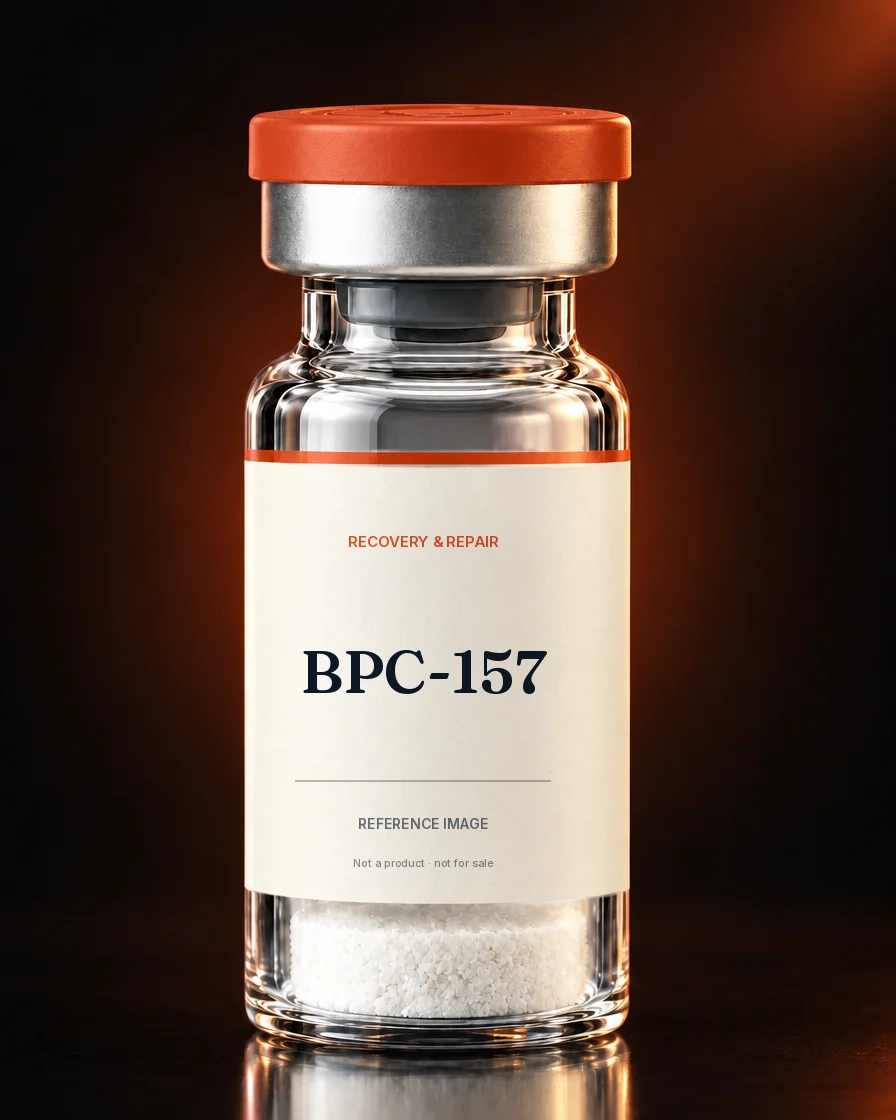
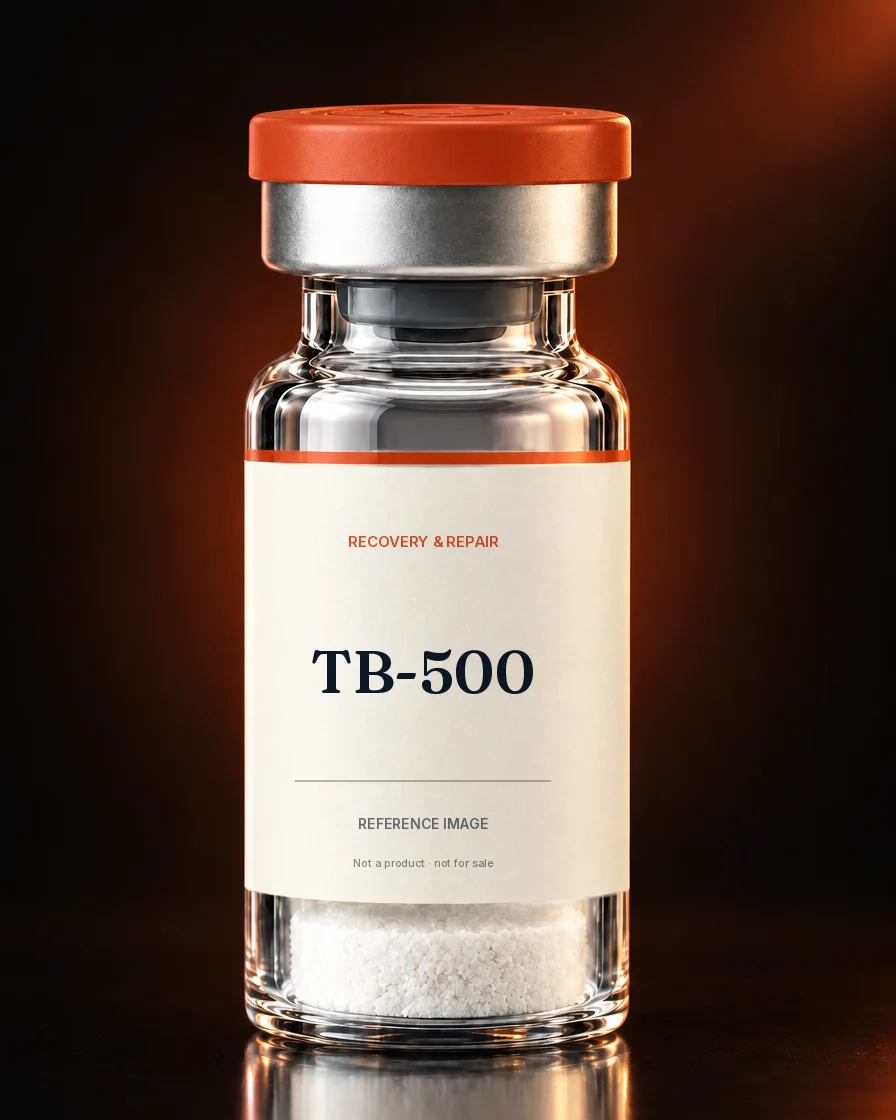
Side by side
| Field | BPC-157 | TB-500 |
|---|---|---|
| Class | Synthetic pentadecapeptide (15 amino acids) 2,5 | Synthetic fragment of thymosin beta-4, sequence LKKTETQ, as listed by the FDA 10 |
| Origin and structure | Described as a partial sequence of a protein ('body protection compound') isolated from human gastric juice 5 | Thymosin beta-4 is a 43-amino-acid protein; a short sequence containing LKKTETQ is described as its central actin-binding region 8. One rat study calls TB-500 synthetic thymosin beta-4, so the exact identity of material sold under this name is not defined in the sources reviewed 6 |
| Proposed mechanism | Preclinical work suggests effects on growth hormone receptor expression, cell-growth and angiogenesis pathways and inflammatory cytokines 1; in rat tendon-fibroblast cultures it increased FAK and paxillin phosphorylation 5 | Thymosin beta-4 is the major actin-sequestering molecule in cells, and short active sites within it have been linked in cell and animal work to migration, angiogenesis and wound-healing activity 8. No fragment-specific mechanism has been established in humans |
| Half-life | In rat and dog studies, a systematic review reports under 30 minutes; human pharmacokinetics have not been established, with liver metabolism and kidney clearance 1 | No half-life for the fragment was identified in the sources reviewed |
| Highest human evidence | No controlled human trials identified; three small uncontrolled human reports (30 participants in total) 2 | No published human studies of the fragment identified. Full-length thymosin beta-4 eye drops reached a phase 2 trial in dry eye 9 |
| FDA status | Described as lacking FDA approval 1; listed by the FDA with concerns about immunogenicity, impurities and limited safety information 10 | Listed by the FDA with concerns about immunogenicity, aggregation and impurities; FDA has not identified human exposure data for drug products containing the fragment 10 |
| Published human outcomes | Retrospective and pilot reports (knee pain, interstitial cystitis) described symptom improvement in most participants; certainty was rated very low 2,3,4 | None for the fragment. In a 72-subject phase 2 trial of full-length thymosin beta-4 eye drops, neither primary endpoint differed from placebo, while some secondary endpoints did 9 |
| Safety signals | A systematic review found no clinical safety data 1; small human reports described no treatment-related adverse events but were uncontrolled 2 | FDA notes immunogenicity risk and an absence of identified human exposure data 10. The full-length eye-drop trial reported no adverse events 9 |
| WADA status | Named under S0 (non-approved substances); prohibited at all times 11 | Named under S2.3 as 'thymosin-β4 and its derivatives e.g. TB-500'; prohibited at all times 11 |
| Evidence level | Mostly animal and cell data: 35 of 36 studies in one systematic review were preclinical 1 | Animal and cell data for the fragment; human data exist only for the full-length protein in other products 8,9 |
BPC-157: what the data says
The BPC-157 literature is dominated by preclinical work: a systematic review of 36 studies found 35 preclinical studies and one clinical study 1. In cultures of rat tendon fibroblasts (cell and animal-tissue data), BPC-157 increased outgrowth from tendon explants, survival under oxidative stress and cell migration 5. In animal injury models (animal-only evidence), the same review reports improved functional, structural and biomechanical outcomes in muscle, tendon, ligament and bone 1.
Human data come from small uncontrolled reports 2. A chart-review survey of knee pain reached 16 patients by telephone, and 11 of 12 who had received BPC-157 alone reported significant improvement; no validated tools were used to measure function 3. A pilot of 12 women with interstitial cystitis who had not responded to pentosan polysulfate reported complete symptom resolution in 10 and most symptoms resolved in the other 2, with no adverse events 4. A 2026 systematic review of these and one further report rated overall certainty as very low and judged the studies to be of poor methodological quality 2.
TB-500: what the data says
No human studies and few animal studies of the TB-500 fragment were identified in the sources reviewed. In one exploratory study of 32 rats with Achilles tendon transection (animal-only evidence), the TB-500 group had significantly higher maximum load to failure and lower tendon-degeneration scores than controls, while the BPC-157 group showed numerically lower scores that did not reach significance for the totals 6. Combining the two did not produce an additional improvement over either alone in that model 6.
Most thymosin beta-4 research concerns the full-length protein, and a review summarizes tissue-repair work in eye, skin, heart and brain models 7. In a randomized, double-masked phase 2 trial in 72 people with moderate to severe dry eye, thymosin beta-4 eye drops did not differ from placebo on either primary endpoint, although some secondary endpoints differed and no adverse events were observed 9. That product is a different molecule and route from the fragment, so it is not direct evidence about TB-500 9,10. Four patients in the knee-pain chart review received BPC-157 together with thymosin beta-4, and 3 of 4 reported significant improvement 3.
Key research differences
- Origin: BPC-157 is described as derived from a gastric-juice protein sequence, whereas TB-500 is listed by the FDA as a fragment of the intracellular protein thymosin beta-4 5,10.
- Human evidence: BPC-157 has three small uncontrolled human reports rated very low certainty 2; no human studies of the TB-500 fragment were identified, and human trial data exist only for full-length thymosin beta-4 eye drops 9.
- Direct comparison: the only head-to-head study identified is one exploratory rat Achilles tendon model (animal only), in which the TB-500 group, but not the BPC-157 group, differed significantly from control on maximum load to failure 6.
- Anti-doping classification: BPC-157 is named under WADA class S0, whereas TB-500 is named under S2.3 growth factors and modulators 11.
- Pharmacokinetic reporting: a systematic review gives a BPC-157 half-life under 30 minutes 1. No comparable figure was identified for TB-500.
- FDA concerns: both are listed for immunogenicity and impurity concerns; for TB-500 the FDA specifically notes no identified human exposure data, and for BPC-157 only limited safety information 10.
Where the evidence is limited
Evidence for both compounds is limited 2,6. The human BPC-157 reports are retrospective or pilot studies without control groups, and one used a telephone survey without validated measures 2,3. The only direct comparison is a small exploratory rat study 6. The FDA also notes that characterizing these peptide ingredients is complex, so the identity and purity of material used in published work is not always clear 10.
Frequently asked questions
Have BPC-157 or TB-500 been tested in controlled human trials?
Are BPC-157 and TB-500 the same thing?
Has any study compared them directly?
How are they classified for anti-doping purposes?
References
- Emerging Use of BPC-157 in Orthopaedic Sports Medicine: A Systematic Review HSS Journal. 2025
- Human evidence for BPC-157 in orthopaedic and regenerative medicine: a systematic review of efficacy and safety Acta Orthopaedica Belgica. 2026
- Intra-Articular Injection of BPC 157 for Multiple Types of Knee Pain Alternative Therapies in Health and Medicine. 2021
- Effect of BPC-157 on Symptoms in Patients with Interstitial Cystitis: A Pilot Study Alternative Therapies in Health and Medicine. 2024
- The promoting effect of pentadecapeptide BPC 157 on tendon healing involves tendon outgrowth, cell survival, and cell migration Journal of Applied Physiology. 2011
- Effects of BPC-157 and TB-500 on Achilles tendon healing in rats: A histopathological and biomechanical study Joint Diseases and Related Surgery. 2026
- Advances in the basic and clinical applications of thymosin β4 Expert Opinion on Biological Therapy. 2015
- Biological activities of thymosin beta4 defined by active sites in short peptide sequences FASEB Journal. 2010
- Thymosin beta 4 ophthalmic solution for dry eye: a randomized, placebo-controlled, Phase II clinical trial conducted using the controlled adverse environment (CAE) model Clinical Ophthalmology. 2015
- Certain Bulk Drug Substances for Use in Compounding that May Present Significant Safety Risks (Category 2; content current as of 04/22/2026) FDA (Human Drug Compounding). 2026
- International Standard: Prohibited List 2026 WADA. 2026
For research use only. Not for human or veterinary use. Not a drug, food, or dietary supplement. This page compares published research and is not medical advice or a recommendation.