
Class
Peptides studied in tissue-repair models
This is a loose grouping of chemically unrelated peptides that share one feature: they have been studied in models of injury, wound healing or fibrosis. Proposed mechanisms range from angiogenic signalling and actin binding to collagen remodelling, a tissue-protective receptor and anti-fibrotic relaxin-receptor signalling. Almost all of the evidence comes from rodents and cells, and the human studies that exist are small or did not meet their primary endpoints.
How the members differ
- BPC-157 has no established molecular target; proposed mechanisms include VEGFR2-linked angiogenesis and increased growth hormone receptor expression in tendon cells.
- TB-500 is an acetylated fragment containing the actin-binding region of thymosin beta-4, but FDA found no in vivo wound study of TB-500 itself.
- ARA-290 is derived from erythropoietin and targets the innate repair receptor without stimulating red cell production; it has a phase 2b human trial in sarcoidosis-associated nerve fibre loss.
- B7-33 is a relaxin-receptor agonist biased toward ERK1/2 signalling, studied in rodent heart and lung fibrosis models, while GHK-Cu and LL-37 have small topical human studies.
Compounds in this group
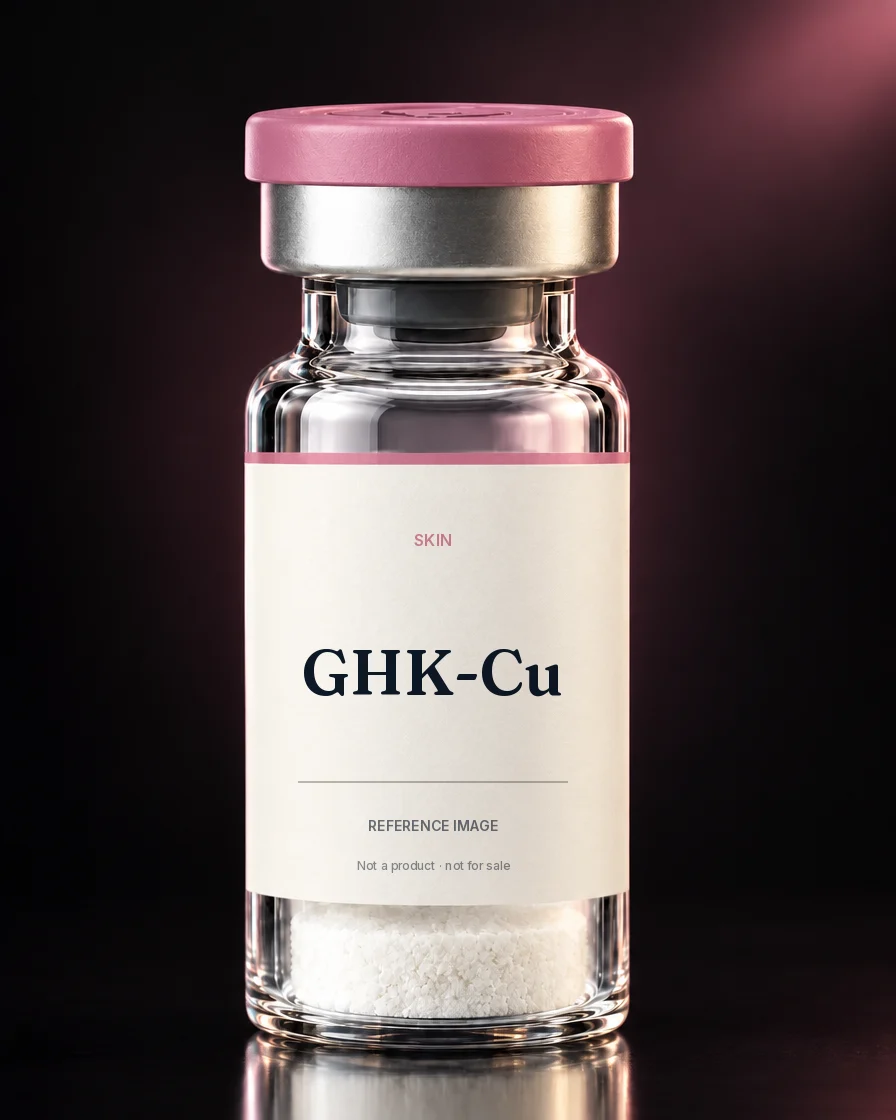 GHK-CuLimited human data · Not approved — research use onlyGHK-Cu is the copper(II) complex of the naturally occurring tripeptide glycyl-histidyl-lysine. It has been examined in cell, tissue and animal models of wound repair and gene expression, with only small human studies of topical cosmetic products. It is not an approved drug.
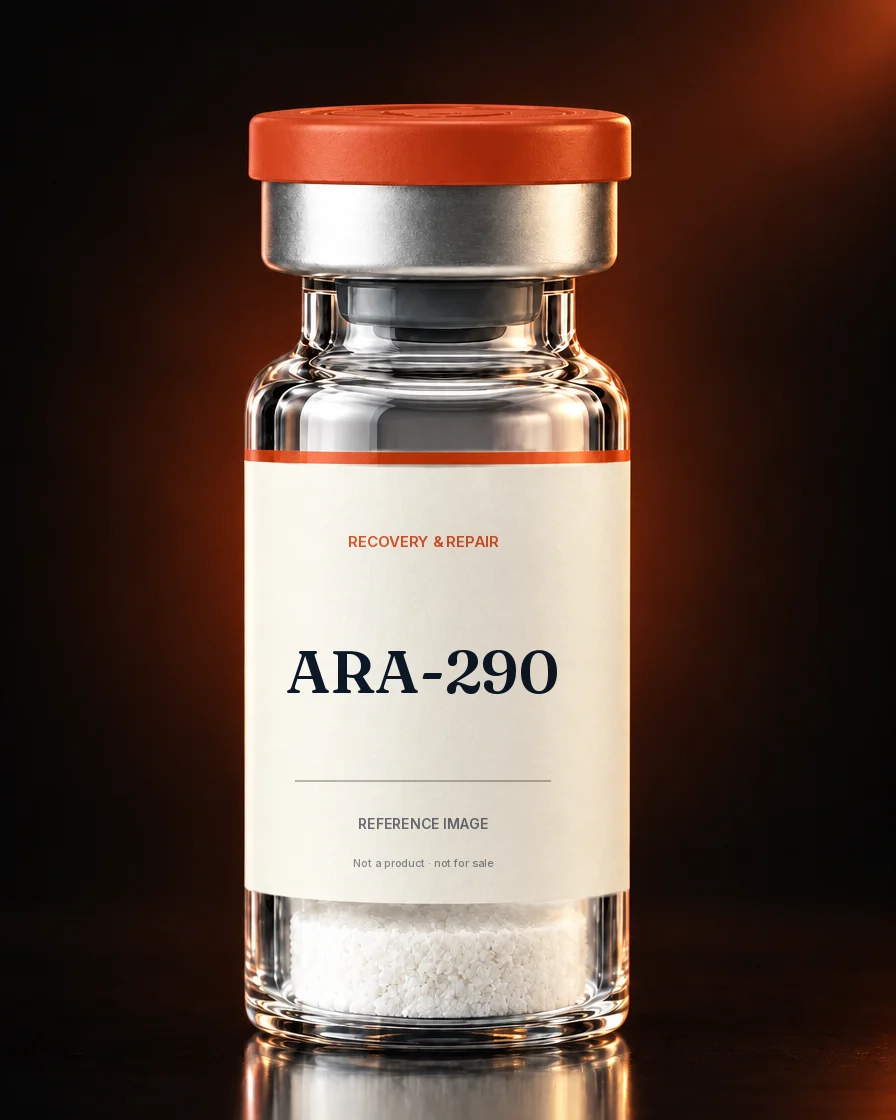 ARA-290Limited human data · InvestigationalA synthetic peptide derived from part of the erythropoietin structure, investigated in research on inflammation, nerve tissue and tissue-protective signaling.
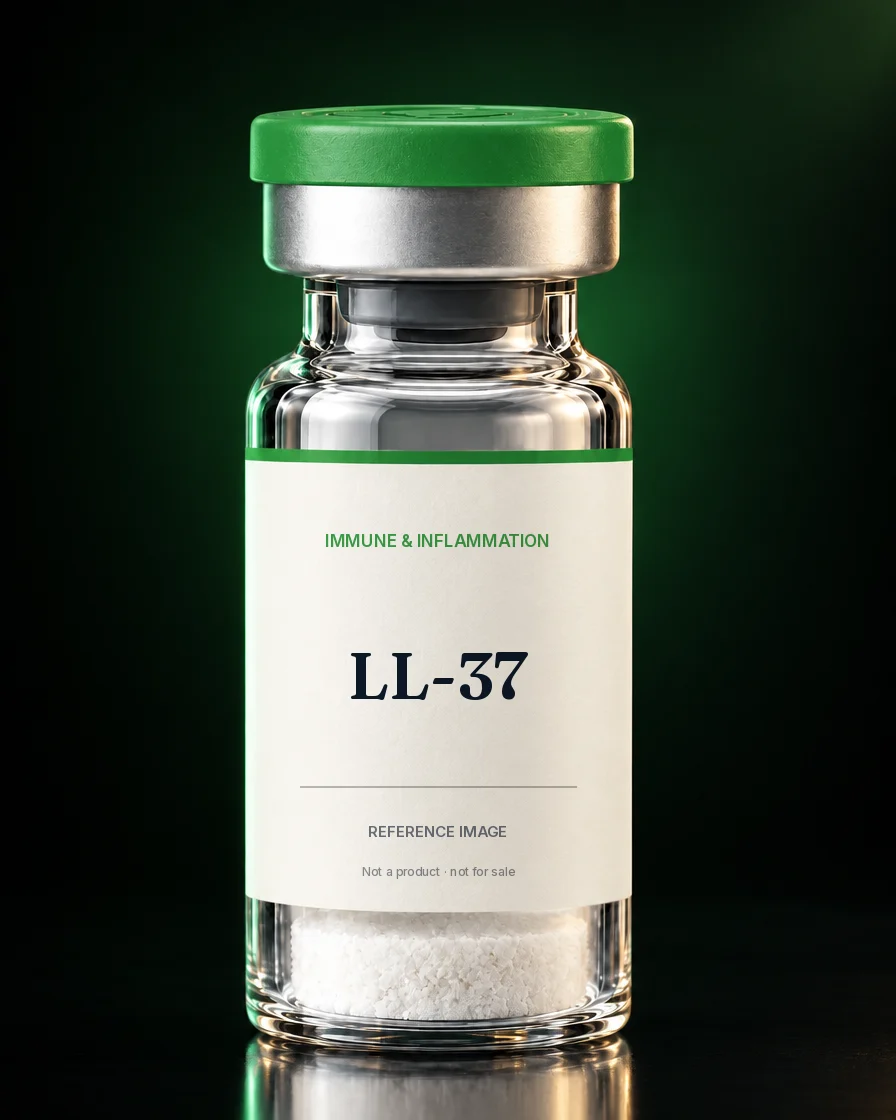 LL-37Limited human data · Not approved — research use onlyA human cathelicidin antimicrobial peptide, cleaved from the precursor hCAP-18, studied in the laboratory for host defense, inflammation and wound biology.
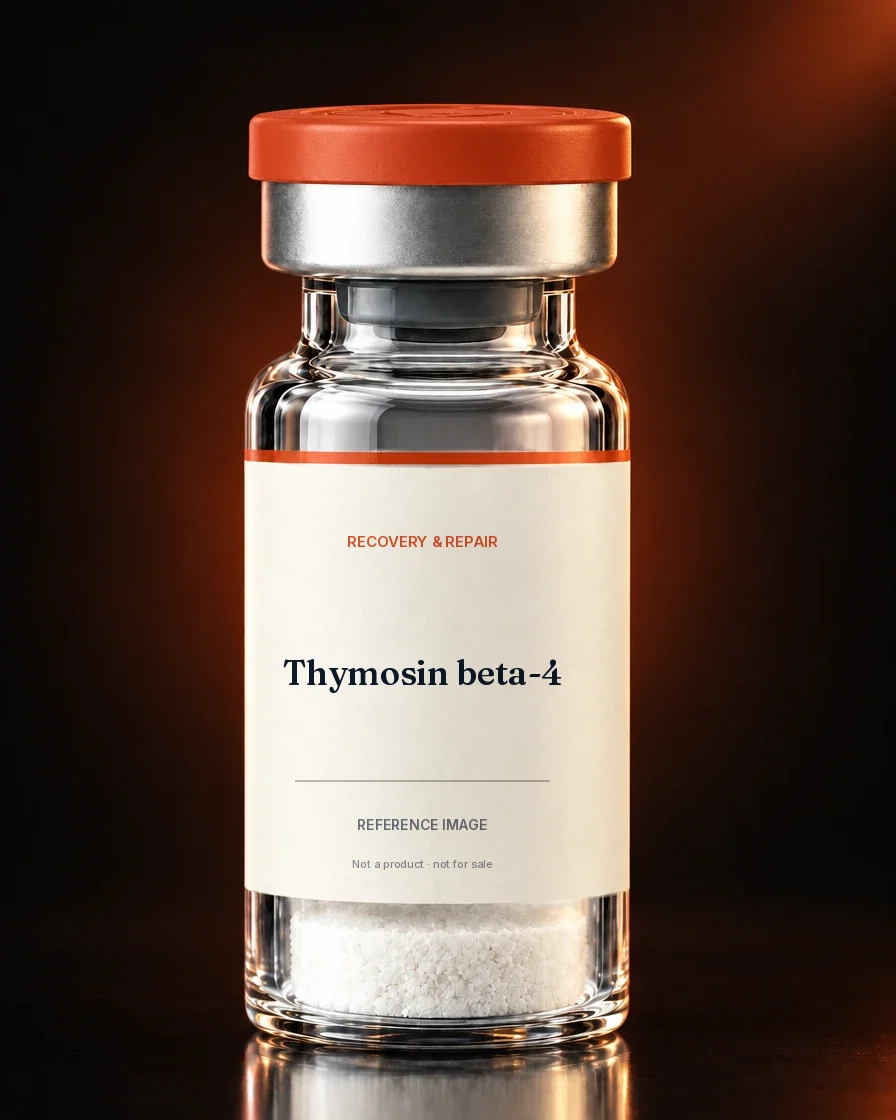 Thymosin beta-4Limited human data · InvestigationalThymosin beta-4 is a naturally occurring 43-amino-acid, N-acetylated actin-binding protein that is under clinical investigation (for example as the RGN-259 eye drop) and is distinct from the seven-residue TB-500 fragment.
 BPC-157Preclinical research · Not approved — research use onlyBPC-157 is a synthetic 15-amino-acid peptide studied mainly in rodent and cell models of wound, tendon and gastrointestinal injury. Human data are limited to small uncontrolled reports, and no regulator has approved it. It is prohibited in sport under WADA's S0 category.
 TB-500Preclinical research · Not approved — research use onlyTB-500 is a synthetic, acetylated seven-amino-acid fragment of thymosin beta-4, and it is often described as if it were the full protein, which is inaccurate. Evidence for the full protein comes from cell, animal and a few human studies, whereas FDA found no human data for TB-500 itself. It is not approved and is prohibited in sport.
 B7-33Preclinical research · Not approved — research use onlyB7-33 is a synthetic single-chain analog of the relaxin-2 B-chain, investigated in preclinical models of fibrosis and cardiovascular tissue remodeling.
Compare GHK-Cu, ARA-290, LL-37 side by side
For research use only. Not for human or veterinary use. Not a drug, food, or dietary supplement. Mechanism descriptions summarize published research and are not claims of effect in people.