
Mechanism
Melanocortin-receptor peptides
Melanocortin-receptor peptides are derived from alpha-melanocyte-stimulating hormone (alpha-MSH) and act at a family of receptors named MC1R to MC5R. MC1R on melanocytes drives eumelanin production and skin pigmentation, while MC3R and MC4R in the brain have been linked to appetite and sexual behaviour in animal work. How selective a compound is across these receptors largely shapes the effects reported for it.
How the members differ
- Afamelanotide binds predominantly to MC1R and is FDA-approved for erythropoietic protoporphyria as a slow-release implant.
- Melanotan II is a cyclic heptapeptide that is not receptor-selective; it was studied in small 1990s trials for tanning and erectile function and was never approved.
- Bremelanotide (PT-141), described as an analog of melanotan II, acts at several subtypes with MC1R and MC4R most relevant per its label, and is approved for HSDD in premenopausal women.
- KPV is the alpha-MSH(11-13) tripeptide; in mice lacking a functional MC1R it was still associated with survival in colitis, suggesting partly MC1R-independent effects.
Compounds in this group
 AfamelanotideHuman trial evidence · FDA-approvedAfamelanotide is a synthetic 13-amino-acid analogue of alpha-melanocyte-stimulating hormone that acts mainly at the melanocortin 1 receptor. It is approved by the FDA as SCENESSE, a 16 mg bioresorbable subcutaneous implant, to increase pain-free light exposure in adults with a history of phototoxic reactions from erythropoietic protoporphyria, and is authorised in the EU for prevention of phototoxicity in the same condition. This entry summarizes the FDA label and published trials for research reference only.
 PT-141Human trial evidence · FDA-approvedPT-141 is the research name for bremelanotide, a cyclic melanocortin receptor agonist that the FDA approved in 2019 as Vyleesi for a narrowly defined form of low sexual desire in premenopausal women. Its mechanism in HSDD is not known, and its main documented adverse reactions are nausea, flushing, headache, injection site reactions and transient blood pressure changes. This entry summarizes the FDA label, the pivotal trials and the earlier preclinical and male erectile dysfunction studies.
 SetmelanotideHuman trial evidence · FDA-approvedSetmelanotide is a cyclic eight-residue melanocortin-4 receptor agonist that the FDA approved in 2020 as Imcivree for obesity caused by specific genetic MC4R-pathway disorders, with acquired hypothalamic obesity added to the label by 2026.
 Melanotan IILimited human data · Not approved — research use onlyMelanotan II is a synthetic cyclic analog of alpha-melanocyte-stimulating hormone that activates several melanocortin receptors, studied in small early human trials for skin pigmentation and erectile function. It has never been approved as a medicine, and its further development moved to related compounds such as bremelanotide (PT-141). Current literature on its safety consists mainly of case reports from unregulated use.
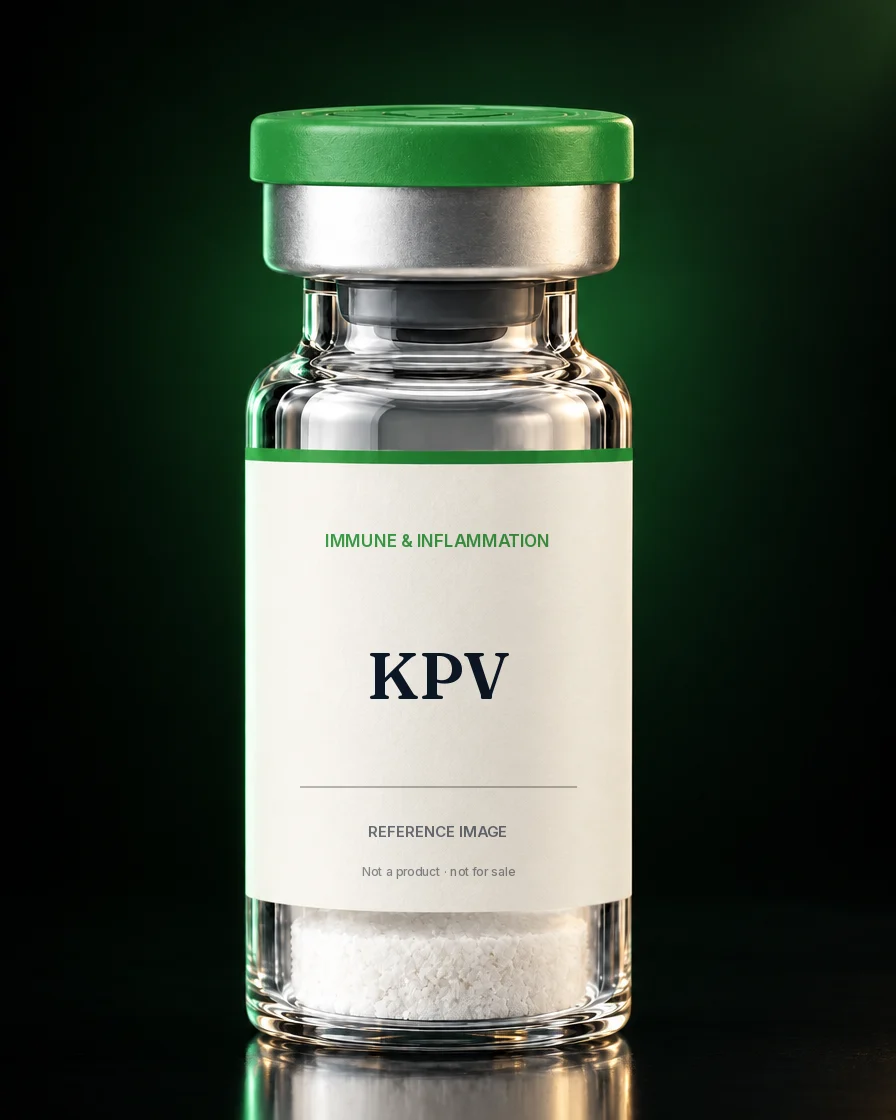 KPVPreclinical research · Not approved — research use onlyKPV is a short tripeptide fragment derived from alpha-melanocyte-stimulating hormone, studied in cell and mouse models of intestinal inflammation signaling. All evidence cited here is preclinical.
Compare Afamelanotide, PT-141, Setmelanotide side by side
For research use only. Not for human or veterinary use. Not a drug, food, or dietary supplement. Mechanism descriptions summarize published research and are not claims of effect in people.