
Muscle & body composition
This hub covers compounds researched for effects on muscle mass, strength, endurance and fat distribution. About half of the compounds listed have some human data, often small or negative, while the rest have been studied only in animals or cells.
Approved or human trial evidence
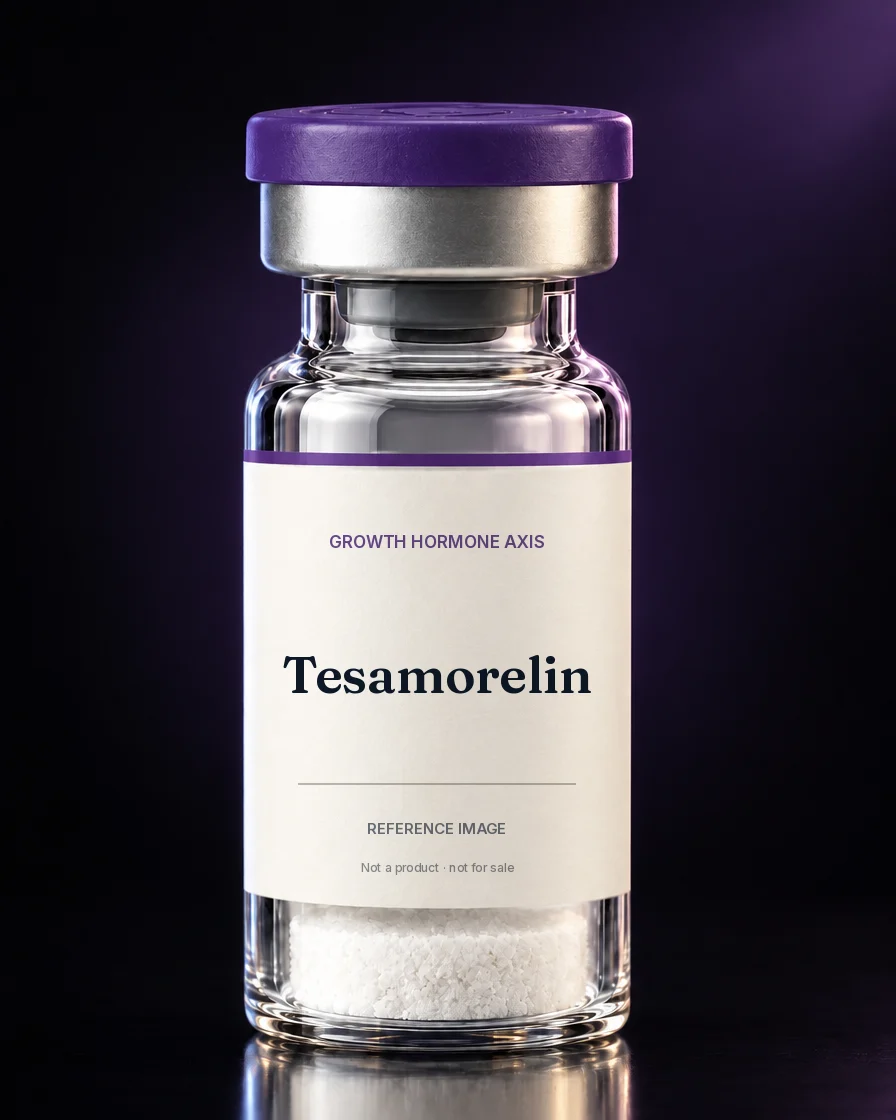 TesamorelinHuman trial evidence · FDA-approvedStudied in two 26-week placebo-controlled phase 3 human trials in HIV-infected adults, measuring visceral adipose tissue; its label states it is not indicated for reducing body weight.
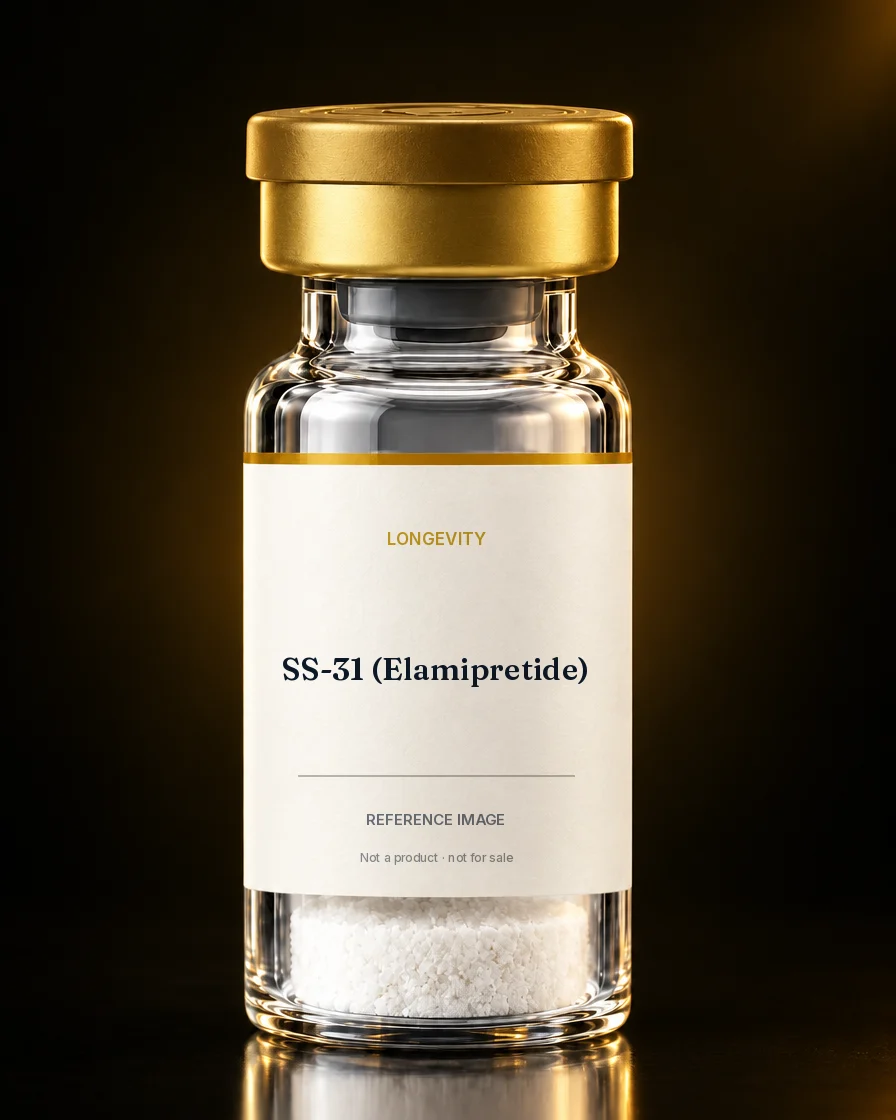 SS-31 (Elamipretide)Human trial evidence · FDA-approvedStudied in humans with Barth syndrome, where knee extensor strength in an open-label extension supported accelerated approval; the phase 3 MMPOWER-3 trial in mitochondrial myopathy missed its endpoints.
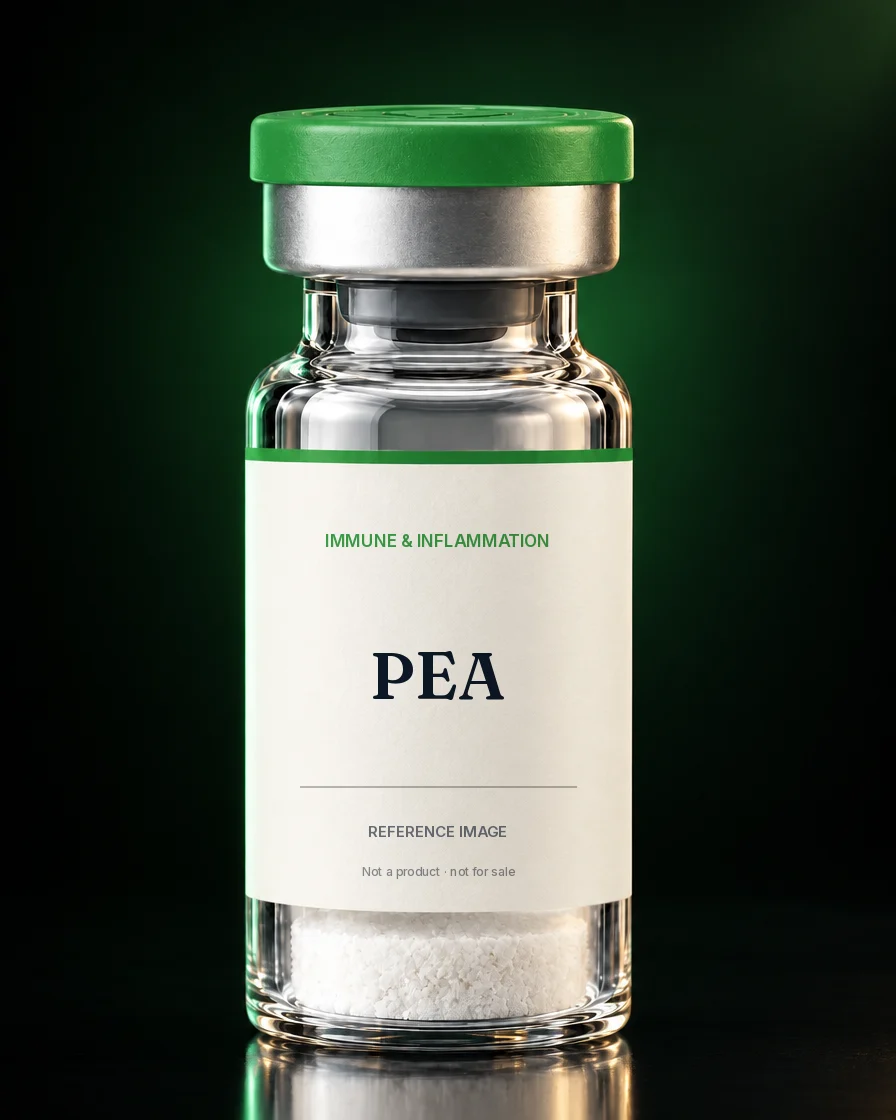 PEAHuman trial evidence · Not approved — research use onlyNot a peptide; a randomized double-blind crossover trial in healthy men found no effect on muscle soreness, strength or jump performance after eccentric exercise.
Limited human data
Animal and laboratory research
 IGF-1 LR3Preclinical research · Not approved — research use onlyIn rat myoblasts, Long IGF-I analogues stimulated protein synthesis more potently than IGF-I; in 5XFAD mice, intranasal use altered body composition. No human study.
 MOTS-cPreclinical research · Not approved — research use onlyIn mice, MOTS-c improved physical performance at young, middle and old ages, with skeletal muscle described as the primary target organ; no controlled human administration trial.
 SLU-PP-332Preclinical research · Not approved — research use onlyA small-molecule ERR agonist, not a peptide; in mice it increased oxidative type IIa muscle fibres and endurance, and cultured human myoblasts were studied ex vivo.
 AOD-9604Preclinical research · Not approved — research use onlyIn obese mice, 14 days of AOD9604 was reported to reduce body weight and body fat; no controlled human efficacy trial was identified.
Not yet graded
 Follistatin 344Preclinical research · Not approved — research use onlyAll human data come from small open-label trials of an AAV gene-therapy construct injected into muscle in muscular dystrophies; no injectable protein product has been studied.
 PEG-MGFEvidence not yet assessed · Not approved — research use onlyNo study of PEG-MGF itself was identified; for unconjugated MGF, an industry replication found no effect on myoblast proliferation in cell culture.
Comparisons in this area
Guides
Questions people ask
Which peptides have human trials for muscle strength?
Elamipretide (SS-31) has human trials in Barth syndrome and primary mitochondrial myopathy, and the phase 3 myopathy trial did not meet its primary endpoints. Follistatin FS344 has been studied only as an AAV gene therapy in small open-label muscular dystrophy trials.
Is there human evidence that injectable follistatin-344 builds muscle?
No. The human evidence concerns AAV gene-therapy constructs carrying the FS344 cDNA, not injected protein, and no study of an injectable follistatin protein product was identified. An analytical study found that only nine of seventeen black-market vials labelled follistatin contained it.
Has MGF or PEG-MGF been shown to increase muscle growth?
No primary study of PEG-MGF was identified. For unconjugated MGF, scientists at two pharmaceutical companies reported that it did not increase proliferation of mouse or human myoblasts in culture, while mature IGF-1 did.
For research use only. Not for human or veterinary use. Not a drug, food, or dietary supplement. Listing a compound under a research goal describes published research in the stated model. It is not a claim that the compound works, and it is not medical advice.