SLU-PP-332
Also known as ERR pan-agonist 332 · 4-hydroxy-N'-(naphthalen-2-ylmethylene)benzohydrazide
SLU-PP-332 is a synthetic small-molecule agonist of the estrogen-related receptors (ERR alpha, beta and gamma), not a peptide, studied as an 'exercise mimetic'. In mice it increased oxidative muscle fibres, endurance and energy expenditure and reduced fat mass, and it has been tested in mouse models of heart failure and kidney ageing. No human study has been published and it is not approved for any use; this entry is for research reference only.
- US status
- Not approved — research use only
- Evidence
- Grade C
- Class
- Small molecule (not a peptide); synthetic pan-agonist of estrogen-related receptors ERR alpha, beta and gamma
More
Research reference, not advice. No administration data. Amiravo sells nothing; some links are referrals.Read the full notice
Key takeaways
- SLU-PP-332 is a small molecule, not a peptide, that activates all three estrogen-related receptors with the highest potency at ERR alpha 1.
- In mice it increased type IIa oxidative muscle fibres and exercise endurance through an ERR alpha-dependent program 1.
- In obese mice it increased energy expenditure and fatty acid oxidation, reduced fat mass and improved insulin sensitivity 2.
- No human study has been published and no clinical trial is registered 7.
- Doping-control laboratories have characterised its human-liver-enzyme metabolites in vitro, describing it as having doping potential 6.
Development stage
Where SLU-PP-332 sits between laboratory work and regulatory approval.
- Preclinical (current)Animal and cell work
- Phase 1First human safety studies
- Phase 2Early efficacy signal
- Phase 3Confirmatory trials
- ApprovedCleared by a regulator
Stage comes from the regulatory record and ClinicalTrials.gov studies naming the compound (for compounds approved nowhere, only completed trials or trials with posted results count) (checked 2026-10-24). A registered trial is not a result.
Mechanism of action
Estrogen-related receptors (ERR alpha, beta and gamma) are orphan nuclear receptors that genetic evidence links to skeletal-muscle exercise capacity 1. SLU-PP-332 is a synthetic agonist of all three, with the highest potency for ERR alpha 1.
Muscle and whole-body metabolism
In a skeletal muscle cell line it increased mitochondrial function and cellular respiration, and in mice it induced an ERR alpha-specific acute aerobic exercise gene program 1. In obese mice it increased energy expenditure and fatty acid oxidation 2.
Heart and kidney
In a mouse pressure-overload heart failure model, ERR agonists including SLU-PP-332 activated fatty acid and mitochondrial genes, with ERR gamma the main mediator 3. In aged mice, ERR agonism reversed age-related mitochondrial dysfunction and inflammatory signalling in the kidney via cGAS-STING and STAT3 pathways 4.
Molecular structure
PubChem CID 5338394 ↗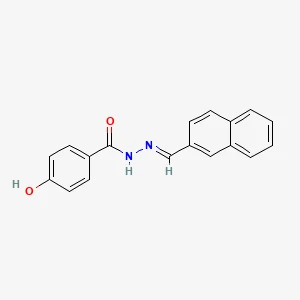
2D depiction generated from the PubChem record. Depictions are schematic and do not show salt form, counter-ions or conformation.
- Formula
- C18H14N2O2
- Molecular weight
- 290.3 g/mol
- CAS
- 303760-60-3
- InChIKey
- RNZIMBFHRXYRLL-XDHOZWIPSA-N
SLU-PP-332 draw calculator
Pick the vial strength seen on the research market and how much water is added, then enter an amount to see the units to draw. Arithmetic only, not a recommendation.
Computed from your inputs. Not a dose or a recommendation.
Compare water volumes for this vialShow
More water = lower concentration = a larger, easier-to-measure draw. Tap a row to use it.
| Water | mg/mL | Draw |
|---|---|---|
| 0.5 mL | 20 | — |
| 1 mL | 10 | — |
| 1.5 mL | 6.667 | — |
| 2 mL | 5 | — |
| 2.5 mL | 4 | — |
| 3 mL | 3.333 | — |
| 5 mL | 2 | — |
Published adverse-event data
Reported in the cited trials or product labels. Frequencies apply to the stated population and do not transfer to other settings.
Emerging safety signals
- In the heart failure model, ERR agonism also downregulated cell-cycle and development pathways in cardiomyocytes, partly via E2F1; the significance outside that model is unknown (animal evidence) 3. 3 (2024)
- No toxicology, carcinogenicity or human safety data were identified in the sources reviewed (absence of evidence) 7. 7 (2026)
What is not known: There are no human pharmacokinetic, safety or efficacy data 7; the human half-life is unknown. Animal findings on endurance, fat mass, heart failure and kidney ageing have not been tested in people 1,2,3,4. Formal toxicology and long-term safety studies were not identified. The acyl-hydrazone structure may be relevant to chemical stability, which was not addressed in the sources reviewed 10.
Clinicians and researchers on video
YouTube videos about SLU-PP-332 from clinicians and researchers. Their views, in their own words; not reviewed or endorsed by Amiravo. Compare what they say with the evidence above.
- SLU-PP-332: Better Than GLP-1s For Fat Loss? (Doctor Review)Dr. Michael Moeller · 12K views · 2026
These creators are not affiliated with Amiravo and do not endorse Amiravo or any product linked on this site. Nothing here is medical advice. Video views counted on YouTube as of Oct 24, 2026.
Regulatory status
- Status
- Not approved for any use. No Drugs@FDA application record was returned 8, no registered clinical study was returned by a ClinicalTrials.gov search 7, and SLU-PP-332 does not appear in any category of FDA's May 14, 2026 503A bulk drug substances list 9. A 2026 analytical paper describes it as a drug candidate under investigation as an exercise mimetic with doping potential 6.
- United States (FDA)
- No approved application was identified 8. SLU-PP-332 does not appear in any category of FDA's May 14, 2026 503A bulk drug substances list 9.
- Sport (WADA)
- SLU-PP-332 and estrogen-related receptor agonists are not named on the WADA 2026 Prohibited List 11. Class S0 prohibits at all times any pharmacological substance not addressed elsewhere on the List and with no current approval by any governmental regulatory health authority for human therapeutic use, such as drugs under pre-clinical development 11; SLU-PP-332 has no such approval. A doping-control paper describes it as relevant to sports drug testing 6.
Status varies by country and changes over time. How we describe regulatory status.
Quality and testing notes
This is a small molecule, not a peptide, so peptide tests such as net peptide content do not apply. Appropriate characterisation includes identity by mass spectrometry and NMR against the PubChem structure (C18H14N2O2, molecular weight 290.3, E-configured hydrazone), HPLC purity with chromatogram, residual solvents, water content and heavy metals [10]. Because the hydrazone can isomerise or hydrolyse, the certificate should state the isomeric form and a recent assay date.
How purity testing works · Reading a certificate of analysis
Check a SLU-PP-332 certificate of analysis against its expected mass (290.3 Da)Storage and handling
General research-context handling only: defer to the supplier's documentation for the specific lot; nothing here is a preparation or administration instruction.
Frequently asked questions
Is SLU-PP-332 a peptide?
What does SLU-PP-332 target?
Has it been tested in humans?
What did mouse studies show?
Is it prohibited in sport?
Latest indexed research
No new studies were filed in the last sweep.
Search all studies on SLU-PP-332 (PubMed, Europe PMC, ClinicalTrials.gov)Listed by publication type from the index record. Inclusion is not an endorsement; open the source to read the findings.
Revision history
Meaningful changes to this entry, with dates and sources. Last reviewed Oct 23, 2026. Typo and layout fixes are not listed.
No recorded changes since the change log began on Oct 23, 2026.
Last reviewed October 23, 2026 by the Amiravo editorial team.
Need the math?
Laboratory arithmetic with every formula shown.
For research use only. Not for human or veterinary use. Not a drug, food, or dietary supplement. This page is educational and is not medical advice.
Unbranded reference image. Amiravo does not produce, supply or sell this compound.
Specifications
- Molecular formula
- C18H14N2O2
- Molecular weight
- 290.3 g/mol
- CAS number
- 303760-60-3
- PubChem CID
- 5338394
- ChEMBL
- CHEMBL4208749
- Format
- Lyophilized vial
- Vial sizes seen
- 5 mg · 10 mg · 20 mg
- Other forms seen
- Oral tablets 50 mg (60-count bottle)
- Type
- Single compound
Identifiers from PubChem. Verify against the supplier’s documentation for your lot.
Research stats
How much has been published, not how good it is.
- PubMed records
- 10
- Indexed as human research
- 6
- Animal-only research
- 3
- Randomized controlled trials
- 0
- Registered trials
- 0
- Trials with posted results
- 0
Counts from title/abstract searches of PubMed, ClinicalTrials.gov, openFDA and NIH RePORTER, checked 2026-10-24. Names shared with other substances can inflate counts. FAERS reports are spontaneous and do not establish cause. Funding shows interest, not evidence. Method
Follow SLU-PP-332
See every new citation, evidence-grade or status change and correction in My Research, with optional email alerts. Free account.