Teriparatide
Also known as Forteo · Forsteo · Bonsity · rhPTH(1-34) · hPTH(1-34) · LY333334
Teriparatide is recombinant human parathyroid hormone (1-34), FDA-approved as Forteo and as generic and 505(b)(2) products for osteoporosis at high fracture risk in postmenopausal women, men, and people on long-term glucocorticoids.
- US status
- FDA-approved
- Evidence
- Grade A
- Half-life
- Approximately 1 hour in serum after subcutaneous injection; peak at about 30 minutes, declining to non-quantifiable concentrations within 3 hours 1.
- Class
- Parathyroid hormone analog (PTH 1-34)
More
Research reference, not advice. Label quotes, not a recommendation. Amiravo sells nothing; some links are referrals.Read the full notice
Key takeaways
- Teriparatide is recombinant human PTH(1-34), approved for osteoporosis at high fracture risk in postmenopausal women, men and glucocorticoid-treated patients 1.
- In the pivotal trial, new vertebral fractures occurred in 5.0% versus 14.3% with placebo 1,2.
- Once-daily exposure preferentially stimulates osteoblastic over osteoclastic activity, whereas continuous PTH excess can be detrimental to bone 1.
- Osteosarcoma occurred in rats; the label advises avoiding use in people at increased baseline risk and considering use beyond 2 years only if fracture risk remains high 1.
- PTH analogs were not mentioned on the WADA 2026 Prohibited List page reviewed 6.
Development stage
Where Teriparatide sits between laboratory work and regulatory approval.
- PreclinicalAnimal and cell work
- Phase 1First human safety studies
- Phase 2Early efficacy signal
- Phase 3Confirmatory trials
- Approved (current)Cleared by a regulator
Stage comes from the regulatory record and ClinicalTrials.gov studies naming the compound (for compounds approved nowhere, only completed trials or trials with posted results count) (checked 2026-10-24). A registered trial is not a result.
Mechanism of action
Endogenous PTH is the primary regulator of calcium and phosphate metabolism in bone and kidney. Teriparatide binds the same high-affinity cell-surface receptors as the 34 N-terminal amino acids of PTH with the same affinity and physiological actions 1.
Exposure pattern
- Once-daily administration stimulates new bone formation on trabecular and cortical surfaces by preferential stimulation of osteoblastic over osteoclastic activity 1.
- In monkeys it improved trabecular microarchitecture and increased bone mass and strength; in humans it increased skeletal mass and bone formation and resorption markers 1.
- Continuous excess of endogenous PTH, as in hyperparathyroidism, may stimulate resorption more than formation 1.
Pharmacokinetics
Absolute bioavailability is about 95%; clearance exceeds liver plasma flow, consistent with hepatic and extra-hepatic clearance 1.
Molecular structure
PubChem CID 16133850 ↗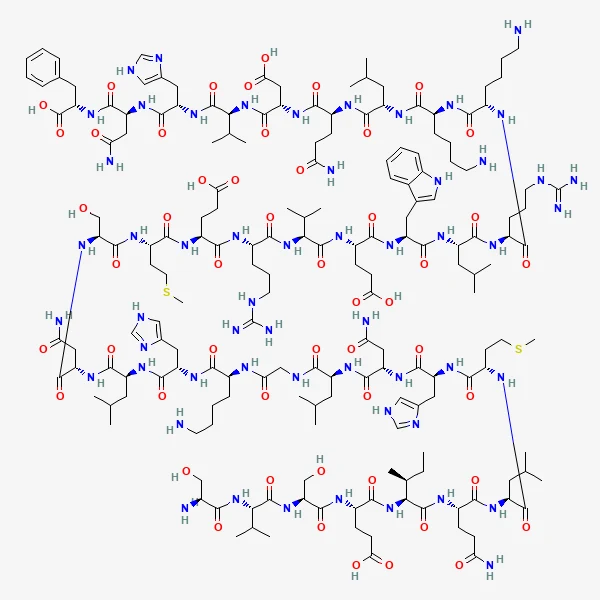
2D depiction generated from the PubChem record. Depictions are schematic and do not show salt form, counter-ions or conformation.
- Formula
- C181H291N55O51S2
- Molecular weight
- 4117.8 g/mol
- CAS
- 52232-67-4
- InChIKey
- OGBMKVWORPGQRR-UMXFMPSGSA-N
Research overview
Human research
Placebo-controlled trials in postmenopausal women (1,637) and men (437), an active-controlled glucocorticoid-induced osteoporosis trial (428), and the VERO comparison with risedronate (1,360) evaluated fractures and bone mineral density 1,2,3.
Animal research
In Fischer 344 rats, teriparatide caused dose- and duration-dependent osteosarcoma, osteoblastoma and osteoma; no bone tumors were detected in an 18-month ovariectomized monkey study with 3 years of follow-up 1.
In-vitro research
Teriparatide was not genotoxic in the Ames test, mouse lymphoma assay or CHO chromosomal aberration assay 1.
Dosing as stated on the FDA label
Quoted from the prescribing information for reference. Prescribing decisions belong to a licensed clinician; this is not a recommendation or instruction for use.
Full dosing reference, study durations and vial arithmetic →- The recommended dosage is 20 micrograms subcutaneously once a day, with supplemental calcium and vitamin D if dietary intake is inadequate 1.
- Use for more than 2 years during a patient's lifetime should only be considered if the patient remains at or has returned to high fracture risk 1.
- Not approved for intravenous or intramuscular use; initial doses should be given where the patient can sit or lie down in case of orthostatic hypotension. Other administration instructions are in the label and are not reproduced here 1.
Background viewing
We haven't found a clinician video focused on Teriparatide yet. Meanwhile, this widely watched talk covers the science of aging in general. It does not discuss Teriparatide.
These creators are not affiliated with Amiravo and do not endorse Amiravo or any product linked on this site. Nothing here is medical advice. Video views counted on YouTube as of Oct 24, 2026.
Regulatory status
- Status
- FDA-approved; the Forteo label gives initial U.S. approval 1987. As of 2026-10-24 Drugs@FDA lists Forteo (NDA 021318), Bonsity and several generic teriparatide products with prescription marketing status; Parathar is discontinued 1,4.
- United States (FDA)
- FDA-approved (label initial U.S. approval 1987). Drugs@FDA lists Forteo (NDA 021318), Bonsity (NDA 211939), NDA 218771 and generic ANDAs from Apotex, Amphastar and Teva with prescription marketing status as of 2026-10-24 1,4.
- Sport (WADA)
- Parathyroid hormone analogs, including teriparatide, were not mentioned on the WADA 2026 Prohibited List page reviewed 6.
Status varies by country and changes over time. How we describe regulatory status.
Quality and testing notes
A certificate of analysis for teriparatide material would be expected to show HPLC purity, identity by mass spectrometry against the label's molecular weight of 4117.8 Da and the PTH(1-34) sequence, net peptide content and endotoxin level [1, 5, 7].
How purity testing works · Reading a certificate of analysis
Check a Teriparatide certificate of analysis against its expected mass (4,117.8 Da)Storage and handling
The Forteo label directs storage under refrigeration at 2-8°C at all times except during administration, protected from light, not frozen; the pen is discarded 28 days after first use [1].
Frequently asked questions
What is teriparatide?
What is it approved for?
How much did it reduce fractures?
Why is there a 2-year consideration?
How does it build bone when hyperparathyroidism weakens bone?
What are common adverse events?
How long does it last in the body?
Latest indexed research
- Bone-targeting engineered exosomes delivering teriparatide mRNA for the treatment of osteoporosis.Other · Regenerative therapy · 2026-10-16
- Response to "Interpreting bone turnover responses and treatment persistence with once-weekly teriparatide".Other · Journal of orthopaedic translation · 2026-10-13
- Case Report: Atypical femoral fractures in adult-onset hypophosphatasia treated with low-dose asfotase alfa and adjunctive teriparatide therapy.Case report · humans · Frontiers in endocrinology · 2026-10-08
- Differential efficacy of initial versus sequential combination of denosumab and teriparatide in osteoporosis at high fracture risk.Other · Osteoporosis international : a journal established as result of cooperation between the European Foundation for Osteoporosis and the National Osteoporosis Foundation of the USA · 2026-10-02
- Conservative Treatment with Adjunctive Use of Teriparatide for Periprosthetic Humeral Fractures after Reverse Total Shoulder Arthroplasty: A Report of 6 Cases.Case report · humans · Clinics in orthopedic surgery · 2026-10-01
Listed by publication type from the index record. Inclusion is not an endorsement; open the source to read the findings.
Revision history
Meaningful changes to this entry, with dates and sources. Last reviewed Oct 24, 2026. Typo and layout fixes are not listed.
- New section· entryOct 24, 2026
New research reference added: Teriparatide.
References
- FORTEO (teriparatide injection), for subcutaneous use, prescribing information (DailyMed, effective 08/2026) FDA label (DailyMed). 2026
- Effect of parathyroid hormone (1-34) on fractures and bone mineral density in postmenopausal women with osteoporosis N Engl J Med. 2001
- Effects of teriparatide and risedronate on new fractures in post-menopausal women with severe osteoporosis (VERO): a multicentre, double-blind, double-dummy, randomised controlled trial Lancet. 2018
- Drugs@FDA (openFDA) application records for teriparatide (NDA 021318 and others) U.S. FDA. 2026
- UniProtKB P01270, Parathyroid hormone (human) UniProt. 2026
- World Anti-Doping Agency Prohibited List 2026 (online version) WADA. 2026
- PubChem compound record for teriparatide PubChem. 2026
Last reviewed October 24, 2026 by the Amiravo editorial team.
Need the math?
Laboratory arithmetic with every formula shown.
For research use only. Not for human or veterinary use. Not a drug, food, or dietary supplement. This page is educational and is not medical advice.
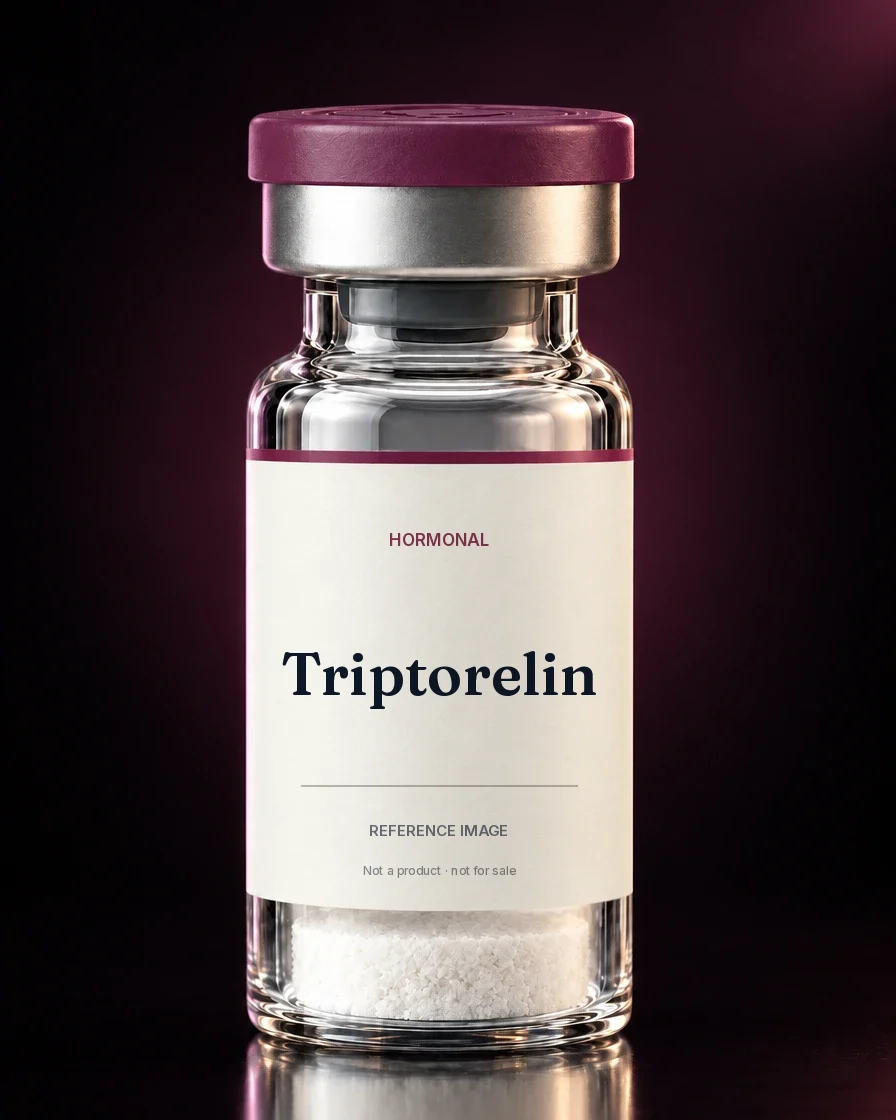
Unbranded reference image. Amiravo does not produce, supply or sell this compound.
Specifications
- Molecular formula
- C181H291N55O51S2
- Molecular weight
- 4,117.8 g/mol
- CAS number
- 52232-67-4
- PubChem CID
- 16133850
- FDA UNII
- 10T9CSU89I
- Sequence
- Ser-
Val- Ser- Glu- Ile- Gln- Leu- Met- His- Asn- Leu- Gly- Lys- His- Leu- Asn- Ser- Met- Glu- Arg- Val- Glu- Trp- Leu- Arg- Lys- Lys- Leu- Gln- Asp- Val- His- Asn- Phe - Type
- Single compound
Identifiers from PubChem. Verify against the supplier’s documentation for your lot.
Research stats
How much has been published, not how good it is.
- PubMed records
- 3,065
- Indexed as human research
- 2,136
- Animal-only research
- 181
- Randomized controlled trials
- 258
- Registered trials
- 182
- Trials with posted results
- 63
- FDA adverse-event reports (FAERS)
- 7,248
- NIH-funded projects naming it
- 477
Counts from title/abstract searches of PubMed, ClinicalTrials.gov, openFDA and NIH RePORTER, checked 2026-10-24. Names shared with other substances can inflate counts. FAERS reports are spontaneous and do not establish cause. Funding shows interest, not evidence. Method
Follow Teriparatide
See every new citation, evidence-grade or status change and correction in My Research, with optional email alerts. Free account.