Why most peptides are injected: oral, nasal and topical delivery
The enzyme and membrane barriers that keep peptides out of the body, the few FDA-approved oral and nasal peptide products, and why oral or spray research peptides lack bioavailability data.
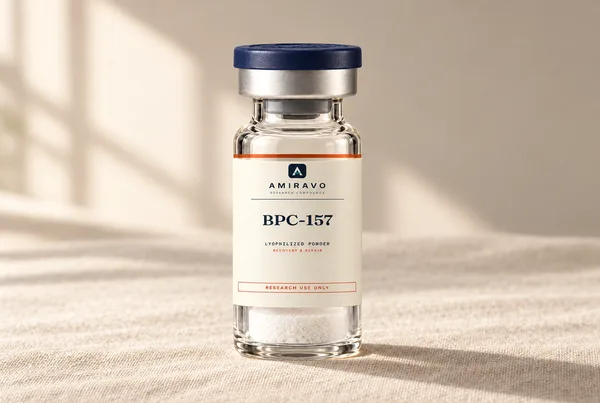
Protein and peptide medicines have generally required injection, and the reason is biology rather than habit [1]. The digestive tract and the nasal lining break down and exclude peptides, and skin keeps most large molecules out [1, 6, 12]. This guide explains those barriers, describes the few FDA-approved peptide products that work by mouth or by nose, and sets out what that means for oral, spray or cream versions of research peptides. It does not describe how to use any product. Cosmetic peptides are covered in topical cosmetic peptides versus research and drug peptides.
The barriers: enzymes and membranes
A review of oral peptide therapeutics opens by noting that protein and peptide therapeutics require parenteral administration, and that oral delivery faces substantial barriers arising from the structure and function of the gastrointestinal tract [1]. Strategies under study include permeation enhancers, inhibitors of gut enzymes, and mucus-penetrating and cell-penetrating peptides [1]. Two problems dominate: poor absorption across the gastrointestinal barrier and extensive breakdown by proteolytic enzymes [2]. Peptides that have reached clinical trials in oral form include insulin, calcitonin, parathyroid hormone and vasopressin [1].
Oral semaglutide: what it took
Oral semaglutide tablets are co-formulated with salcaprozate sodium (SNAC), which the FDA label describes as facilitating absorption, and absorption occurs predominantly in the stomach [3]. In clinical and dog studies, absorption took place close to the tablet surface and required SNAC; the enhancer protected the peptide from enzymatic breakdown through local buffering and only transiently increased absorption, by a transcellular route with no evidence of effects on tight junctions [2]. Those mechanism studies were carried out by the manufacturer's scientists [2]. Even with this engineering, the label estimates absolute bioavailability at roughly 0.4% to 1% for RYBELSUS tablets and 1% to 2% for OZEMPIC tablets [3]. By comparison, the label for semaglutide injection gives 89% absolute bioavailability after subcutaneous administration [4]. The tablet label also sets strict conditions around food and water because absorption depends on them [3]. Semaglutide was itself modified to last longer in the body, as described in how peptides are engineered to last longer.
A second oral example: octreotide
Octreotide is also approved as an oral delayed-release capsule, MYCAPSSA, which is listed with prescription status in Drugs@FDA [11]. Its formulation includes sodium caprylate among other excipients [5]. In healthy subjects, a single oral dose produced systemic exposure similar to a subcutaneous dose about 200 times smaller, with peak levels 33% lower [5]. Taking the capsule with food reduced the rate and extent of absorption by about 90% [5].
Nasal peptides that FDA has approved
The nasal route has its own barriers. A review of nasal delivery reports that the nasal bioavailability of peptide and protein drugs is normally less than 1%, citing weak membrane permeability, enzymatic degradation in the nasal mucosa and rapid mucociliary clearance [6]. Some products work nonetheless, each with its own formulation and label. Marketing status below is from Drugs@FDA as of 22 October 2026 [11].
- Calcitonin salmon nasal spray. Generic versions have prescription status, while the original MIACALCIN nasal spray is discontinued [11]. The label gives bioavailability relative to intramuscular injection of 3% to 5% in healthy volunteers, and warns that conclusions drawn from injectable studies may not apply to the spray [7].
- Desmopressin nasal spray. Generic versions have prescription status, while DDAVP nasal spray is discontinued [11]. The label states the drug is absorbed through the nasal mucosa and warns that scarring, edema or other changes in the nasal mucosa may alter absorption [8].
- Nafarelin (SYNAREL) nasal solution. A GnRH agonist with prescription status [11]. Its label notes that, based on studies in monkeys, it is not absorbed after oral administration [9].
- Glucagon nasal powder (BAQSIMI). Prescription status [11]. The powder contains betadex and dodecylphosphocholine as excipients alongside glucagon [10].
Skin as a barrier
For skin, dermatologists have proposed a "500 Dalton rule": the argument that a compound's molecular weight must be under about 500 daltons for skin absorption, because larger molecules cannot pass the corneal layer [12]. It is an argued rule of thumb rather than a hard limit, but it gives scale. PubChem lists BPC-157 at a molecular weight of 1419.5 [13] and semaglutide at 4114 [14]. Evidence on topical peptides is reviewed in the topical peptides guide.
What this means for oral and spray research peptides
Each approved oral or nasal peptide product above has a specific formulation, often with a named absorption enhancer, and its absorption figures come from studies of that formulation [3, 5, 7, 10]. For BPC-157, FDA states it has identified no, or only limited, safety-related information for the proposed routes of administration [15]. As of 22 October 2026, Amiravo has not found published human bioavailability data for oral, nasal or topical forms of the unapproved research peptides in this library. Without such a study, a claim that a capsule, spray or cream delivers a research peptide into the bloodstream is an assumption rather than a measured result.
Questions to ask about a non-injected form
- Is there a published pharmacokinetic study in humans for this exact formulation and route [3, 5]?
- Does the formulation name an absorption enhancer, as approved oral and nasal products do [3, 5, 10]?
- Is bioavailability stated relative to an injected reference, as on the calcitonin and semaglutide labels [4, 7]?
Key points
- Enzymatic breakdown and poor absorption across the gut lining are the main reasons peptides are injected [1, 2].
- Oral semaglutide needs SNAC and still reaches roughly 0.4% to 2% absolute bioavailability, against 89% by subcutaneous injection [3, 4].
- FDA-approved nasal peptides include calcitonin, desmopressin, nafarelin and glucagon products, each with its own formulation [7, 8, 9, 10, 11].
- Nasal bioavailability of peptides is typically low because of permeability, enzymes and mucociliary clearance [6].
- No human bioavailability data were found for oral, nasal or topical forms of unapproved research peptides as of 22 October 2026.
Compound pages with evidence labels, verified identifiers, and references.
BPC-157: specifications, key findings, and references in one place.
Related on Amiravo
Compounds mentioned
More on Basics
Educational information for research use only. Not medical advice.