Abaloparatide
Also known as Tymlos · BA058 · BA-058 · BIM-44058 · PTHrP(1-34) analog · Abaloparatide-SC
Abaloparatide is a synthetic 34-amino-acid analog of parathyroid hormone-related peptide, FDA-approved in 2017 as Tymlos for osteoporosis at high fracture risk in postmenopausal women and, to increase bone density, in men.
- US status
- FDA-approved
- Evidence
- Grade A
- Half-life
- Approximately 1 hour; median time to peak about 0.5 hours after subcutaneous injection 1.
- Class
- Parathyroid hormone-related peptide (PTHrP) analog; PTH1 receptor agonist
More
Research reference, not advice. Label quotes, not a recommendation. Amiravo sells nothing; some links are referrals.Read the full notice
Key takeaways
- Abaloparatide is a PTHrP(1-34) analog approved as Tymlos for postmenopausal osteoporosis at high fracture risk and to increase bone density in men with osteoporosis 1.
- In ACTIVE, new vertebral fractures occurred in 0.6% versus 4.2% with placebo over 18 months 1,2.
- The label states that use for more than 2 years during a lifetime is not recommended 1.
- Common adverse reactions included hypercalciuria, dizziness, nausea, headache and palpitations; orthostatic hypotension may occur within 4 hours of injection 1.
- PTH and PTHrP analogs were not mentioned on the WADA 2026 Prohibited List page reviewed 5.
Development stage
Where Abaloparatide sits between laboratory work and regulatory approval.
- PreclinicalAnimal and cell work
- Phase 1First human safety studies
- Phase 2Early efficacy signal
- Phase 3Confirmatory trials
- Approved (current)Cleared by a regulator
Stage comes from the regulatory record and ClinicalTrials.gov studies naming the compound (for compounds approved nowhere, only completed trials or trials with posted results count) (checked 2026-10-24). A registered trial is not a result.
Mechanism of action
Abaloparatide acts as an agonist at the PTH1 receptor (PTH1R), activating cAMP signaling in target cells 1.
Bone effects
- Once-daily administration stimulates new bone formation on trabecular and cortical surfaces through osteoblastic activity 1.
- In rats and monkeys it increased BMD and bone mineral content, correlating with bone strength 1.
- In postmenopausal women, the formation marker sPINP peaked at 93% above baseline at month 1, while the resorption marker sCTX peaked at 26% above baseline at month 3 1.
Heart rate
A dose-dependent heart-rate increase developed within 15 minutes of injection and resolved in about 6 hours 1.
Molecular structure
PubChem CID 76943386 ↗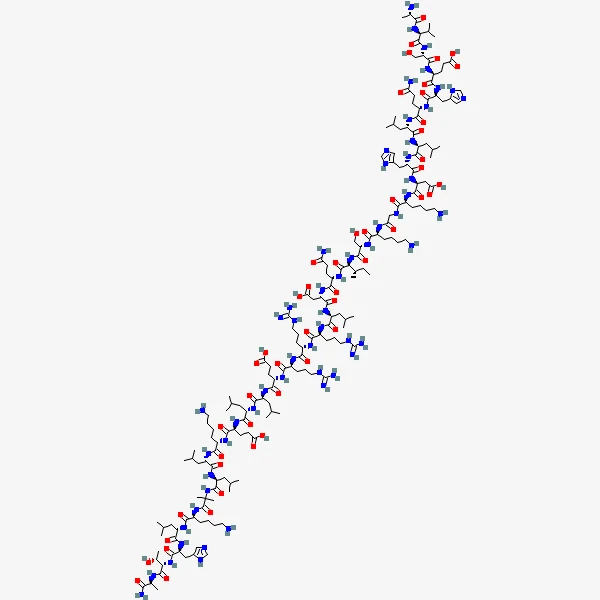
2D depiction generated from the PubChem record. Depictions are schematic and do not show salt form, counter-ions or conformation.
- Formula
- C174H300N56O49
- Molecular weight
- 3961 g/mol
- CAS
- 247062-33-5
- InChIKey
- BVISQZFBLRSESR-XSCWXTNMSA-N
Research overview
Human research
An 18-month placebo-controlled fracture trial in 2,463 postmenopausal women (ACTIVE, with an open-label teriparatide arm and an alendronate extension) and a 12-month placebo-controlled BMD trial in 228 men (ATOM) support the labeled indications 1,2,3.
Animal research
In 2-year Fischer rat studies, abaloparatide caused marked dose-dependent increases in osteosarcoma and osteoblastoma; in rats and monkeys it increased BMD and bone strength 1.
In-vitro research
Abaloparatide is a PTH1R agonist that activates cAMP signaling in target cells 1.
Dosing as stated on the FDA label
Quoted from the prescribing information for reference. Prescribing decisions belong to a licensed clinician; this is not a recommendation or instruction for use.
Full dosing reference, study durations and vial arithmetic →- The recommended dosage is 80 micrograms subcutaneously once daily, with supplemental calcium and vitamin D if dietary intake is inadequate 1.
- Safety and efficacy have not been evaluated beyond 2 years; use for more than 2 years during a patient's lifetime is not recommended 1.
- Do not administer intravenously or intramuscularly; give the first several doses where the patient can sit or lie down. Other administration instructions are in the label and are not reproduced here 1.
Background viewing
We haven't found a clinician video focused on Abaloparatide yet. Meanwhile, this widely watched talk covers the science of aging in general. It does not discuss Abaloparatide.
These creators are not affiliated with Amiravo and do not endorse Amiravo or any product linked on this site. Nothing here is medical advice. Video views counted on YouTube as of Oct 24, 2026.
Regulatory status
- Status
- FDA-approved (initial U.S. approval 2017) as Tymlos, NDA 208743, listed with prescription marketing status as of 2026-10-24 1,4.
- United States (FDA)
- FDA-approved (initial U.S. approval 2017) as Tymlos, NDA 208743, with prescription marketing status per Drugs@FDA as of 2026-10-24 1,4.
- Sport (WADA)
- Parathyroid hormone and PTHrP analogs, including abaloparatide, were not mentioned on the WADA 2026 Prohibited List page reviewed 5.
Status varies by country and changes over time. How we describe regulatory status.
Quality and testing notes
A certificate of analysis for abaloparatide material would be expected to show HPLC purity, identity by mass spectrometry against the label's molecular weight of 3961 Da, confirmation of the Aib residue and C-terminal amide, net peptide content and endotoxin level [1, 6].
How purity testing works · Reading a certificate of analysis
Check a Abaloparatide certificate of analysis against its expected mass (3,961 Da)Storage and handling
The label directs refrigerated storage (2-8°C) before first use; after first use, up to 30 days at 20-25°C; do not freeze or expose to heat [1].
Frequently asked questions
What is abaloparatide?
What is it approved for?
How much did it reduce fractures?
How does it differ from teriparatide?
Is there a time limit on use?
What are common adverse reactions?
How long does it last in the body?
Latest indexed research
- Real-world comparison of abaloparatide and romosozumab: effects on bone mineral density and three-dimensional hip structure.Other · Osteoporosis international : a journal established as result of cooperation between the European Foundation for Osteoporosis and the National Osteoporosis Foundation of the USA · 2026-09-28
Listed by publication type from the index record. Inclusion is not an endorsement; open the source to read the findings.
Revision history
Meaningful changes to this entry, with dates and sources. Last reviewed Oct 24, 2026. Typo and layout fixes are not listed.
- New section· entryOct 24, 2026
New research reference added: Abaloparatide.
References
- TYMLOS (abaloparatide) injection, for subcutaneous use, prescribing information (DailyMed, effective 08/2026) FDA label (DailyMed). 2026
- Effect of Abaloparatide vs Placebo on New Vertebral Fractures in Postmenopausal Women With Osteoporosis: A Randomized Clinical Trial (ACTIVE) JAMA. 2016
- The Efficacy and Safety of Abaloparatide-SC in Men With Osteoporosis: A Randomized Clinical Trial (ATOM) J Bone Miner Res. 2022
- Drugs@FDA (openFDA) application record NDA 208743, TYMLOS U.S. FDA. 2026
- World Anti-Doping Agency Prohibited List 2026 (online version) WADA. 2026
- PubChem compound record for abaloparatide PubChem. 2026
Last reviewed October 24, 2026 by the Amiravo editorial team.
Need the math?
Laboratory arithmetic with every formula shown.
For research use only. Not for human or veterinary use. Not a drug, food, or dietary supplement. This page is educational and is not medical advice.
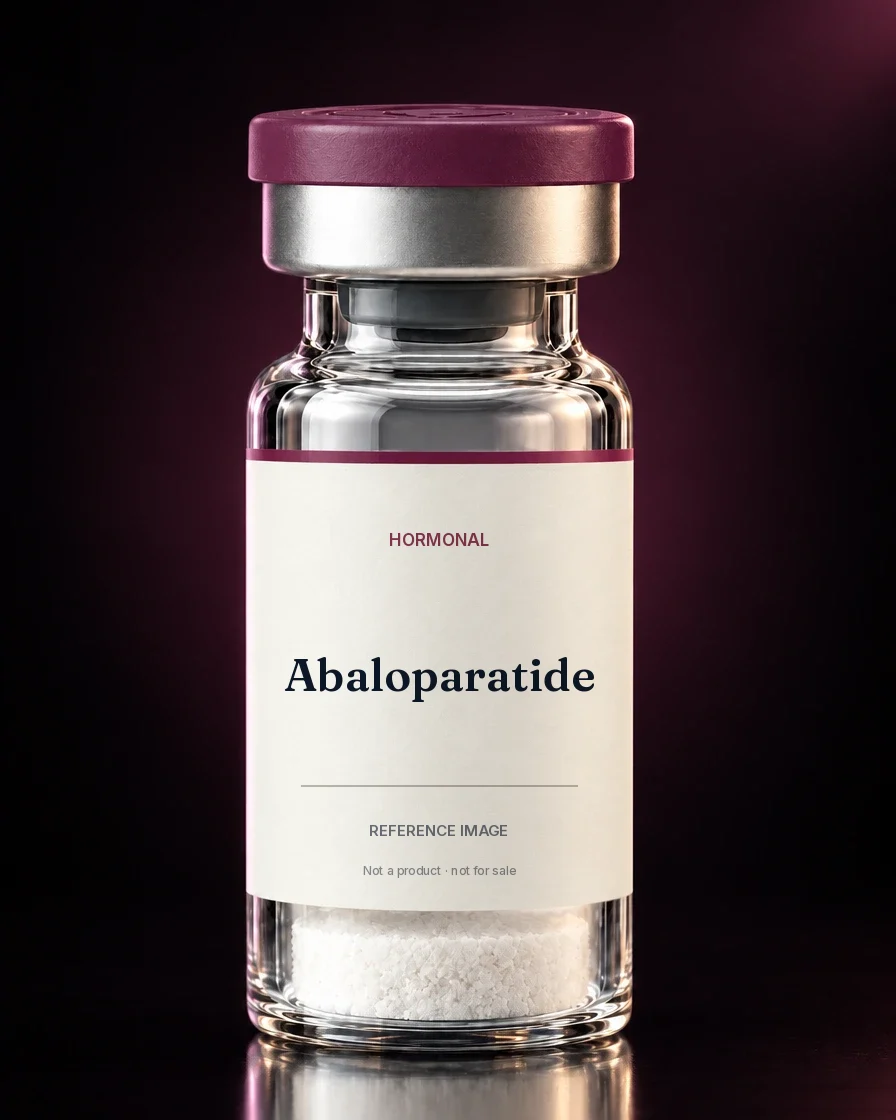
Unbranded reference image. Amiravo does not produce, supply or sell this compound.
Specifications
- Molecular formula
- C174H300N56O49
- Molecular weight
- 3,961 g/mol
- CAS number
- 247062-33-5
- PubChem CID
- 76943386
- FDA UNII
- AVK0I6HY2U
- ChEMBL
- CHEMBL4084894
- Sequence
- Ala-
Val- Ser- Glu- His- Gln- Leu- Leu- His- Asp- Lys- Gly- Lys- Ser- Ile- Gln- Asp- Leu- Arg- Arg- Arg- Glu- Leu- Leu- Glu- Lys- Leu- Leu- Aib- Lys- Leu- His- Thr- Ala- NH2 - Type
- Single compound
Identifiers from PubChem. Verify against the supplier’s documentation for your lot.
Research stats
How much has been published, not how good it is.
- PubMed records
- 407
- Indexed as human research
- 266
- Animal-only research
- 44
- Randomized controlled trials
- 31
- Registered trials
- 25
- Trials with posted results
- 11
- FDA adverse-event reports (FAERS)
- 439
- NIH-funded projects naming it
- 71
Counts from title/abstract searches of PubMed, ClinicalTrials.gov, openFDA and NIH RePORTER, checked 2026-10-24. Names shared with other substances can inflate counts. FAERS reports are spontaneous and do not establish cause. Funding shows interest, not evidence. Method
Follow Abaloparatide
See every new citation, evidence-grade or status change and correction in My Research, with optional email alerts. Free account.